- Have any questions?
- +86 15953537010
- admin@wepower-electronic.com

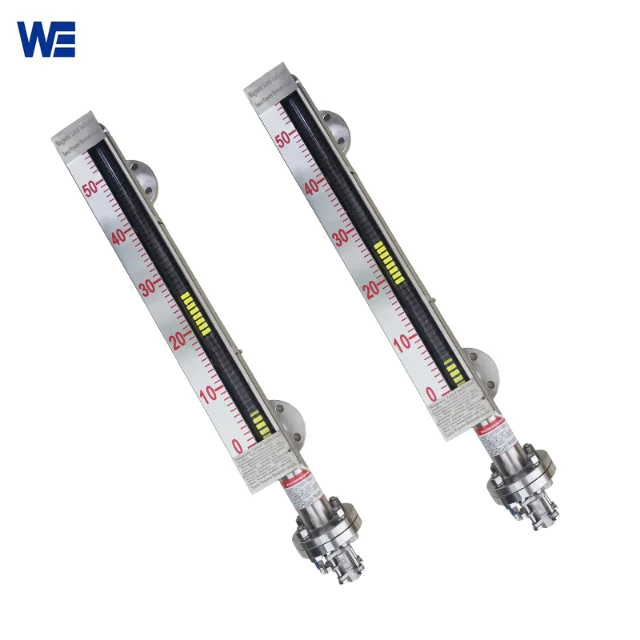
Before in-depth discussion of technical details, it’s worth appreciating a core truth: Magnetic Float Level Gauges work without any electrical power. The magnetic flap level gauges depend entirely on buoyancy and magnetic interaction, which makes them invaluable in industries where safety, reliability, and simplicity are non negotiable.
1)Magnetic Level Gauge Construction and Working Principle
Core Components of a Magnetic Level Gauge
At the heart of a magnetic level gauge are three main elements:
- A floatthat contains a permanent magnet, designed to move vertically with the fluid level.
- A nonmagnetic chamber—commonly stainless steel—that isolates the float from the external environment.
- An external visual indicator, often a rail with magnetic flaps or rotating rollersthat change color as the float moves.
The construction ensures complete separation between the process media and the indicator, maintaining safety even with corrosive or hazardous fluids. The distinguishing feature of this magnetic level gauge is that the liquid medium is completely isolated from the indicator, so it is very safe and durable under any circumstances.
The Role of Magnetic Coupling in Operation
The key to this system is magnetic coupling. As the float rises or falls within the sealed chamber, its internal magnet influences the external indicator:
- The float’s magnetic field penetrates the chamber wall.
- This field causes nearby magnetic flaps or rollers to rotate.
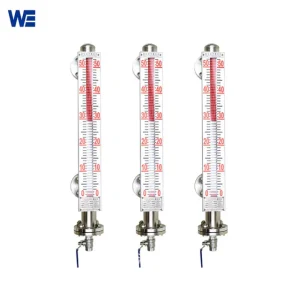
- These visual indicators flip to show a red (liquid) or white (no liquid) color, giving a clear realtime display.
There’s no need for mechanical linkage or direct contact—just clever use of magnetic force and buoyancy. The panel roller outside the main body of UHZ magnetic liquid level meter is subjected to the action of the float inside the main body (with directional magnetic source, developed according to different media and pressures) to promote the flip plate to display red and white colors.
Why No Power Source Is Required
This is what sets magnetic gauges apart:
- The float moves purely due to buoyancy—no motors or electronics involved.
- The external indicators respond passively via magnetic attraction.
- Even in total power loss situations or explosive zones, these gauges keep working.
The most notable feature of the side mounted magnetic flap level gauge is that the liquid medium is completely isolated from the indicator, so it is very safe, reliable and durable under any circumstances.
Chamber and Float Design for Process Compatibility
Every process is different—so material compatibility matters. Chambers must tolerate:
- High temperatures (up to 250°C or more)
- Pressures up to 16MPa
- Chemically aggressive fluids
Floats are sized based on fluid density; too dense or too light can affect performance. Medium Density ≥0.45g / cm³ ensures reliable buoyancy.
Mechanical Indicator Systems: Types and Configurations
Depending on the application, users can choose:
- Flipdisc indicators: visible red/white contrast, great for outdoor readability.
- Rollertype indicators: smoother movement, better in vibrating environments.
Both types operate silently and maintenance free.
2)Advantages of Using Magnetic Level Gauges in Process Control
Operational Safety in Hazardous Environments
In chemical plants or oil refineries, safety is paramount.
- No wires or batteries—eliminating spark risk.
- Magnetic coupling means no contact with hazardous media.
Electrical for explosive gas atmospheres, these devices are designed for maximum safety.
Maintenance Free Performance Over Time
Once installed, they pretty much run themselves:
- No moving parts exposed to wear.
- Visual check possible without opening any panel or valve.
- Longterm stability means reduced downtime.
Simple structure, easy installation, low maintenance costs.
Compatibility with Various Fluids and Tank Designs
Whether your tank holds acid, oil, water, or cryogenic LNG:
- Materials like stainless steel 316L or PTFE allow broad chemical resistance.
- Can be mounted on horizontal, vertical, or even underground tanks.
- Suitable for highviscosity fluids too.
3)Installation Parameters That Affect Performance Accuracy
Mounting Orientation and Tank Connection Methods
For reliable readings:
| Parameter | Requirement |
| Mounting orientation | Must be vertical |
| Flange alignment | Must match tank’s nozzle orientation |
| Chamber slope | ≤ 5° to avoid float sticking |
The product is installed vertically, and the installation slope should not be greater than 5 degrees.
Effects of Fluid Properties on Float Behavior
Buoyancy changes with fluid density:
- Less dense fluids require larger floats.
- Highviscosity fluids slow down float response time—can be addressed with damping systems.
If not accounted for during design, readings can lag or become unstable.
4)Enhancing Functionality with Integrated Technologies
Coupling Magnetic Gauges with Transmitters or Switches
For automation:
- Reed switches can trigger alarms at preset levels.
- 4–20 mA transmitters allow integration into SCADA/DCS systems without breaching seal integrity.
The liquid level and interface signals can be converted into two wire 4–20mADC standard signals.
When to Consider Hybrid Systems for Monitoring Needs
In complex systems:
- Combine visual magnetic indication with radar or magnetostrictive sensors.
- Get local redundancy plus remote monitoring capabilities.
These hybrid setups offer best of both worlds reliability.
5)Practical Applications Across Industries Using Magnetic Level Gauges
Use Cases in Petrochemical and Refining Processes
They’re widely deployed in:
- Interface detection in multiphase separators
- Highpressure storage tanks
- Flammable vapor zones
This series of level gauges are widely used for liquid level measurement and control in various production processes such as petroleum, chemical industry.
Integration into Water Treatment Facilities
In wastewater plants or dosing tanks:
- Visual feedback makes it easy for technicians.
- No electrical components reduces hazard near open basins.
Deployment in Food Processing Environments
Hygienic versions meet CIP standards:
- No electronic leakage risk
- Stainless steel materials prevent contamination
- Easy cleaning cycles
6)Leveraging Wepower Solutions for Long Term Reliability
Customization Options Based on Process Requirements
Wepower offers tailored solutions considering:
- Tank size and shape
- Liquid characteristics (density, viscosity)
- Environmental conditions (temperature, pressure)
Wepower offers tailored configurations based on tank geometry, fluid characteristics, and environmental conditions.
Supporting Automation Goals Through Sensor Integration
Beyond magnetic indicators, Wepower provides:
- Pressure Sensors
- Flow Meters
- Viscosity Meters
- Digital transmitters with HART/Modbus output
All are engineered to work together in smart systems.
FAQs
Q: Are these gauges suitable for very high temperatures?
Absolutely. With proper material selection, models can handle up to 450°C.
Q: Do magnetic level gauges work on horizontal tanks?
Yes. They are customizable for vertical or horizontal tank applications with proper chamber alignment.
Q: Is field calibration required often?
Not really. Once installed and calibrated properly, they require little to no recalibration over time.
Q: Can they be integrated into digital control systems?
Yes. By adding reed switches or 4–20 mA transmitters, they support full digital integration.