- Have any questions?
- +86 15953537010
- admin@wepower-electronic.com

1)Brand Reputation and Industry Experience
Importance of Long-Term Market Presence
When you’re picking a Radar Level Transmitter brand, it’s smart to check how long the company has been around. A brand that’s been in the game for years usually means it’s trustworthy. Their products likely work well, and they’ve kept up with new tech over time. Companies that stick around through ups and downs often have customers who rely on them.
Yantai Wepower Electronic Co., Ltd has been specializing in radar level transmitters for over 20 years. Our products are sure to give you excellent value for money.
Evaluating Technical Expertise and Innovation Capabilities
Good radar level transmitters need clever technology to be accurate and flexible. Brands that put effort into research come up with neat features, like millimeter-wave tech or better ways to handle signals. Take Yantai Wepower Electronic Co., Ltd., for example. Since 2003, we’ve shown they know their stuff and keep improving their radar level transmitters for all kinds of jobs.
2)Product Range and Technological Specialization
Differences Between Non Contact Radar Level Transmitter and Guided Wave Radar Level Transmitter
It’s important to know how these two types of radar level transmitters work so you can pick the right one. Non-contact Radar Level Transmitters send out microwave signals that bounce off the material in a tank. They’re pretty accurate, usually hitting within ±2 mm to ±5 mm.
But Guided Wave Radar (GWR) level transmitters use a probe to guide the microwave signal inside the tank. These are often a bit more precise, with accuracy from ±1 mm to ±3 mm. Both can measure liquids in tanks or silos. GWR is better for tough spots, like high-pressure tanks or materials that don’t reflect signals well.
Availability of Customized Radar Level Transmitter Solutions
Sometimes, you need a radar level transmitter made just for your setup, like for odd-shaped tanks or tricky materials. Some brands offer custom options to handle things like high-pressure containers or harsh chemicals.
Yantai Wepower Electronic Co., Ltd. Customization Service lets you tweak their sensors to fit your exact needs perfectly.
Compatibility with Various Industrial Applications
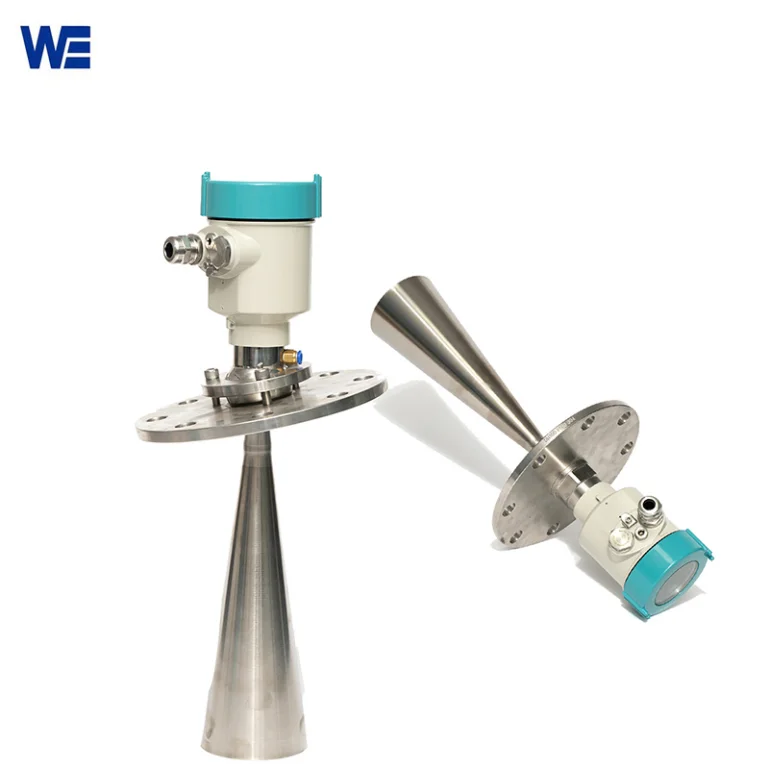
The best radar level transmitter brands work in all sorts of industries, from chemicals to food making. The WERD-9X Series Non Contact Radar Level Transmitter, for instance, is super flexible. Its small antenna and strong anti-interference features make it great for many uses. Millimeter wave radar has a tight beam, clear resolution, wide frequency range, and can handle interference well, so it fits lots of different jobs.
3)Accuracy, Stability, and Signal Processing Capabilities
The Role of Advanced Signal Algorithms in Radar Level Measurement
Clever signal tricks are a big deal for radar level measurement. They help the device figure out which signals are real and which are fake. For example, the radar control system’s microprocessor checks the time it takes for a signal to go out and come back. It averages the results to give you accurate readings, even if the environment keeps changing.
Comparing Accuracy Between Guided Wave and Non Contact Technologies
Both types of Radar Level Transmitters are solid, but they’re a bit different. Guided Wave Radar level transmitters aren’t as bothered by things like vapor or choppy surfaces, so they’re great for tricky setups. Non-contact radar level transmitters, though, work well for lots of materials. They’re especially handy for general tasks like silo radar level measurement.
4)Technical Support and After-Sales Service
24/7 Technical Assistance as a Key Differentiator
Having help whenever you need it is super important when setting up or fixing a radar level transmitter. Brands that offer support all day and night keep your work running smoothly.
Yantai Wepower Electronic Co., Ltd. has a team ready to help 24 hours on working days. That’s a big deal for companies working across different time zones.
Evaluating Warranty Policies and Maintenance Accessibility
A good warranty shows a brand trusts its radar level transmitters. Plus, if you can easily get manuals or spare parts, fixing things is much simpler. Brands with clear warranty rules and easy maintenance make life easier for users.
5)Compliance with International Standards and Certifications
Why Certification Matters for Radar Level Transmitters in Regulated Industries
Some industries, like medicine or oil and gas, have strict rules for radar level transmitters. Certifications like Ex d, Ex ia or ISO show the product meets global safety and quality standards. If you’re in a regulated field, certified devices are a must to keep things safe and legal.
6)Cost-Effectiveness and Return on Investment
Balancing Initial Cost with Long-Term Operational Value
Top Radar Level Transmitter brand might cost more upfront, but they save you money later. They need less fixing and last longer. Cheaper brands might break sooner, so you end up spending more to replace them.
Energy Efficiency in Non Contact Radar Level Transmitter Systems
Systems like the WERD-9X Series 80G FM Radar Level Meter are smart about power. They hit ±2 mm accuracy while using very little energy per reading. That keeps your costs down without losing precision.
Assessing ROI Through Reduced Maintenance and Increased Uptime
Non-contact radar level transmitters don’t touch the material, so they don’t wear out as fast. Non-contact radar means no wear. That means fewer breakdowns and more time working, which boosts your productivity.
Frequently Asked Questions (FAQ)
Q: Which type offers better accuracy: Non Contact Radar Level Transmitter or Guided Wave?
A: Guided Wave Radar (GWR) level transmitters are a bit more precise, hitting ±1 mm to ±3 mm. Non-contact radar level transmitters usually get ±2 mm to ±5 mm. GWR is better in tough spots with vapor or rough surfaces.
Q: Are these devices suitable for solids like powders or grains?
A: Yup! The non-contact radar level transmitters can handle solids like powders or grains. They’re great for silo radar level measurement if set up right.
Q: Is technical assistance available after installation?
A: Brands like Yantai Wepower Electronic Co., Ltd. offer 24-hour support on working days. Their skilled team helps fix problems fast, so you don’t lose time on important tasks.
For dependable radar level transmitter solutions tailored to your needs—from chemical tanks to food-grade silos—check out the full range at Yantai Wepower Electronic Co., Ltd., based in the coastal city of Yantai. Our skilled technical staff provide 24-hour working-day technical assistance and after-sale support.