- Have any questions?
- +86 15953537010
- admin@wepower-electronic.com

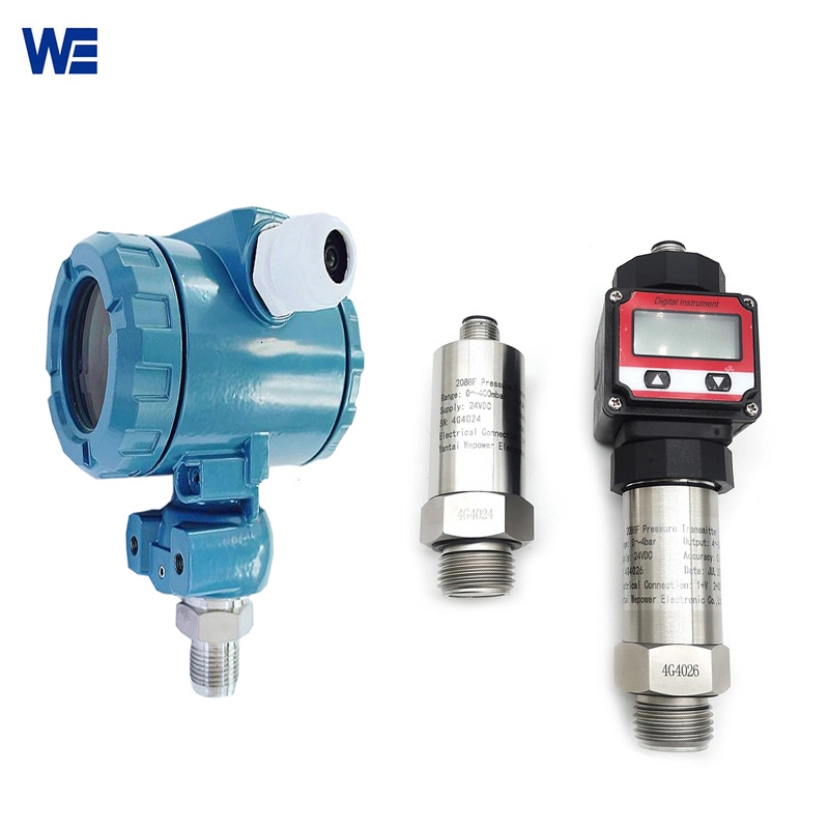
Selecting the suitable diaphragm for a pressure sensor isn’t just about deciding the first model that fits the smart pressure range—it’s about adjusting technical specifications with the real world demands of your application. Whether you’re measuring fluid levels for a food processing tank or measuring steam pressure for a power plant, transmitter’s parameter must match accuracy, environment,and needs of your system.
1)Key Parameter for Chooseing a Diaphragm Pressure Sensor
Accuracy and Solution Request
For any pressure measuring task, understanding the acceptable error margin is basic. A typical industrial application may have toleration ±1% FS, but in high accuracy environment,such as pharmaceutical or aerospace application, customer may prefer much higher accuracy.
The 2088 series Piezo resistive pressure transmitter provides an accuracy of ±0.5%FS and long term stability of max. ±0.3%FS/year, making it suitable for most general purpose industrial applications. Still, if your system demands higher accuracy, considering models like the 3051 series pressure transmitter which offer 0.1% accuracy and two years stability of 0.15%.
Resolution depends on both the transmitter and output signal type—analog signals like 4–20 mA provide continuous output but may lack the granularity of digital protocols in certain conditions. Also, Offset thermal drift of 0.1%FS/℃ for ≤100kPa or 0.05%FS/℃ for >100kPa needs to be considered when run across temperature fluctuating .
Pressure Range and Measurement Type
The 2088S offers a wide range from -0.1…0~0.01…100MPa (-1…0~0.1…1000bar), which covers most low to high pressure applications.
Selecting between gauge, absolute, and differential pressure types is very important:
- Gauge for atmosphericreferenced measurements,
- Absolute for vacuum or sealed systems,
- Differential for flow or filter monitoring.
The 2088 Pressure Transmitter can measure gauge pressure , absolute pressure , and sealed gauge, making it versatile for many applications. Overpressure protection—like the 1.5 times FS or 110MPa (min.) overpressure rating—helps tp ensure the sensor survives under transient spikes.
Compatibility with Process Media
Media compatibility is often overlooked but crucial. The 2088S adopts SS316L diaphragms and SS304 connecting, offering high resistance to corrosive and viscous media. This feature makes 2088S pressure transmiter can fit for chemical and petroleum industry that harsh media are common.
When measuring gases, liquids, or mixed phase materials, material integrity over time is important too. Also you can consider sealing materials like Viton gaskets for chemicals, and whether the sensor uses welded seals or replaceable gaskets for hihger grade durability.
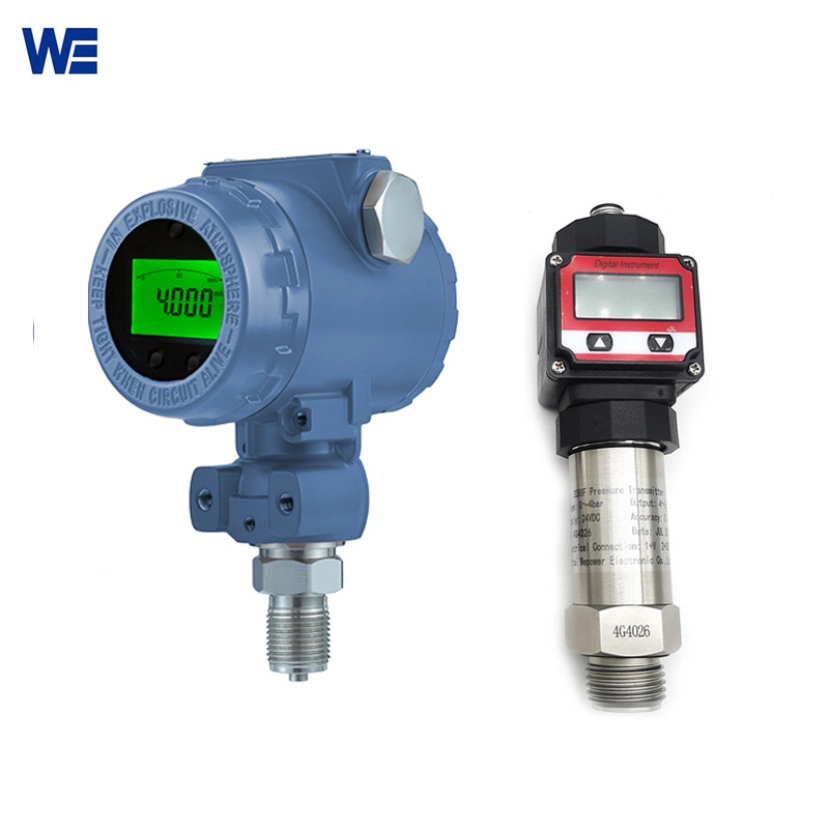
2)Mechanical and Electrical Configuration Considerations
Mechanical Interface and Mounting Options
Mechanical fittings must match your pipeline or vessel design. The 2088S comes with a standard G1/4 male thread but can be customized. For viscous media, a flush diaphragm like in the 3051TG flat diaphragm pressure transmitter prevents clogging.
In vibrating or mobile systems, ensure vibration resistance either through rugged mechanical design or proper mounting brackets. The 3051 series Pressure Transmitter also offers tube type and wall mounting brackets in both carbon steel and stainless steel.
Electrical Interface and Signal Output Selection
Signal compatibility with your control system—PLC, DCS, or SCADA—is a must check. Analog outputs like 420mADC (2-wire) or 0/15VDC (3 wire) are standard in many sensors including the 2088S.
Modern smart pressure transmitters like 3051TA include 4–20 mA output plus digital HART communication which can enable enable remote configuration and diagnostics.
Pay attention to connector choices: DIN43650 plug, M12 connector, cable version options ,please choose carefully and based on environmental sealing needs at site.
3)Sensor Technology and Performance Characteristics
Piezoresistive Type Pressure Sensor’s Benefits and Limitations
Piezoresistive sensors are widely used for their high sensitivity and cost effectiveness. The 2088S is a good example: It uses a high stable and reliable pressure sensor and special circuit board to produce transmitter. However, this principle presssure transmitter can be more susceptible to thermal drift compared with capacitive sensors unless properly compensated.
For higher accuracy needs or demanding environments, capacitive sensors may offer better linearity and hysteresis characteristics—but often at a higher cost than Piezoresistive pressure sensor.
Response Time and Dynamic Behavior
Fast changing processes like steam flow or hydraulic actuators require fast response times. The 3051 series boasts a current output update time of 90 ms, ideal for dynamic conditions.
To reduce signal noise in turbulent environments (like pump discharge lines), damping settings can help: Available setting time is 0–32s; higher values produce more stable outputs. Also consider the frequency response if integrating into closed loop control systems.
4)Environmental Suitability and Reliability Factors
Operation Temperature and Environment Protection Ratings
Temperature ratings are key: The 2088S operates from -30°C to +80°C with storage up to 120°C. For other hotter industry, models using silicone oil filling like the 3051RT series can handle up to 130°C.
Moisture environment and dust ingress can cause early failure—so checking IP ratings is essential. The 2088S housing protection is IP65, suitable for most indoor and sheltered outdoor applications.
Long term reliability is another factor: models with max ±0.3%FS/year long term drift offer better stability over time.
Compliance with Industry Standards and Certifications
If you’re operating in hazardous zones or regulated industries, certifications are non negotiable. The 3051 series supports Explosion proof and weather proof housing, suitable for ATEX/IECEx environments.
For food or pharmaceutical applications, ensure FDA compatibility and RoHS standard, the calibration traceability might also be required—especially in critical control loops or quality assurance systems.
5)Application Specific Requirements in Pressure Monitoring Systems
Integration into a Pressure Monitoring System Architecture
Pressure transmitters play various roles—from local display units to integral parts of SCADA systems. In centralized systems, analog outputs may suffice; in distributed smart networks, HART or Modbus protocols may be needed.
For mission critical operations such as reactor monitoring or boiler control, implement redundancy strategies using dual sensors or hot swappable modules.
Wepower Electronic, as a seasoned pressure transmitter manufacturer based in China, offers tailored sensor models suited for such diverse architectures—from simple analog transmitters to intelligent multi variable units with digital integration capabilities.
Customization Options Based on Model Type Variants
Need some models that are more specific? Pressure transmitter like 2088S comes with configurable options:
- Pressure range: -0.1…100 Mpa
- Output signal: 4–20 mA, 0–10 VDC, etc.
- Electrical connection: DIN43650 plug / Cable / M12 connector
Wepower Electronic supports OEM specific modifications as well as modular upgrade paths—futureproofing your investment without replacing entire assemblies.
6)Long Term Maintenance and Lifecycle Cost Analysis
Maintenance Accessibility and Interchangeability
Replaceable connectors and standardized threads (like G1/4 or G1/2) reduce downtime during sensor changes. It is also helpful that LED displaying on some models enables local diagnosis without extra tools and operations.
Simplified recalibration routines—like the zero calibration function using keypad operation on the 3051 series—also save time during periodic checks.
Total Cost of Ownership Over Operational Life
Price matters—but so does longevity. A cheaper sensor that drifts after six months costs more in lost productivity than a stable unit that lasts five years. Energy efficient output types (like 4–20 mA loops) also minimize power draw over long installations.
From performance to service life to integration ease, choosing well upfront reduces costly surprises later on—and that’s what defines smart instrumentation decisions.
FAQs
Q1: What’s the difference between gauge pressure sensor and absolute pressure sensors?
Gauge measures is relative to atmospheric pressure; absolute measures against vacuum occasions.
Q2: Can I use one sensor type across all my systems?
Not ideal. When applications vary:using gauge for tanks open to atmosphere, absolute for vacuum systems, differential for flow/filtration detection.
Q3: How often should I calibrate my pressure transmitter?
Usually once a year, but high accuracy applications may require frequent checks depending on drift specs.
Q4: Are diaphragm sensors suitable for corrosive chemicals?
Yes—if you choose proper diaphragm material like SS316L or Hastelloy C depending on media compatibility.
Q5: Does Wepower Electronic offer support for custom sensor configurations?
Yes, Wepower Electronic provides OEM specific solutions tailored to unique process conditions across industrial sectors.