- Have any questions?
- +86 15953537010
- admin@wepower-electronic.com

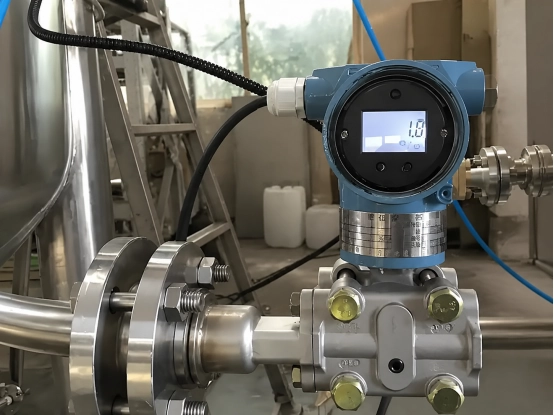
A hydrogen service transmitter may look healthy after commissioning. Months later, the zero begins to move. Calibration corrects it, then the drift returns.
The cause is not always electronics. Hydrogen may permeate the transmitter isolation diaphragm and ingress into the internal fill fluid. This slow process is often misdiagnosed.
What Is Hydrogen Permeation in a Pressure Transmitter?
A pressure transmitter incorporates a thin isolation diaphragm to isolate the process medium from the sensing element. Process pressure causes deflection of the diaphragm, and the fill fluid transmits this displacement to the sensor element.
Hydrogen permeation occurs when hydrogen moves through the metal diaphragm into this sealed fill system.
It is not the same as an external leak. The process connection may remain tight and a pressure test may show nothing unusual. Hydrogen moves through the diaphragm material itself. Once it reaches the fill fluid side, it can accumulate inside the transmitter.
How Does Hydrogen Enter the Pressure Transmitter?
The diaphragm, fill fluid, capillary, and sensor behave as one hydraulic system. Hydrogen interferes with that system in two stages.
Hydrogen Diffuses Through the Isolation Diaphragm
Isolation diaphragms are thin by design. A thin diaphragm responds well to small pressure changes, but it also provides a short path through the metal.
Under suitable conditions, hydrogen atoms enter the process facing surface and migrate through the diaphragm’s crystal structure. The rate may depends on temperature, hydrogen partial pressure, diaphragm material, thickness, and exposure time, etc.
This can occur in hydrogen production, storage, compression, refining, and chemical processes that generate atomic hydrogen. A transmitter may pass a workshop test and still drift after months on a hot process line.
Hydrogen Accumulates in the Fill Fluid
After crossing the diaphragm, hydrogen enters the fill fluid and may recombine into hydrogen molecules. As concentration rises, gas bubbles can form.
Fill fluid is intended to be nearly incompressible; gas is not. A bubble can absorb part of the diaphragm movement before pressure reaches the sensor.
The result may be a slow response, zero shift, span error, or unstable reading. A familiar field pattern is a diaphragm pressure transmitter that calibrates correctly when cold, drifts as the process heats up, then appears better after shutdown. It is not proof of permeation, but it deserves attention.
Why Is Hydrogen Permeation a Problem?
Early permeation often looks like ordinary calibration drift. The zero is adjusted, the loop returns to service, and nobody treats it as a mechanical issue.
Then the calibration interval becomes shorter.
Typical effects include:
- Recurring zero or span shifts
- Delayed response to pressure changes
- Unstable output under steady conditions
- Disagreement with a reference gauge
- Diaphragm damage in severe cases
A small error on a utility line may be acceptable. The same error on compressor suction pressure, electrolyzer control, tank level, or hydrogen blanketing can affect operating decisions.
Recalibration only moves the output back into range. It does not remove hydrogen from the fill system.
Which Conditions Increase the Risk of Hydrogen Permeation?
Temperature is often the strongest warning sign. Permeation generally accelerates as diaphragm temperature rises, so a transmitter mounted on a hot connection may deteriorate faster than one installed through a suitable remote seal.
Risk also increases with hydrogen partial pressure and continuous exposure. A modest rate can still become significant after a year of uninterrupted service.
Watch for combinations of:
- Elevated process temperature
- High hydrogen concentration
- Continuous operation
- Chemistry that generates atomic hydrogen
- Thin metallic diaphragms
- Repeated unexplained drift
Material selection should not be based on corrosion resistance alone. An alloy may tolerate the process chemically while still allowing too much hydrogen diffusion.
How Can You Recognize Hydrogen Permeation?
There is no single diagnostic signal. The judgment comes from process conditions, maintenance history, calibration records, and inspection.
Repeated one direction drift is suspicious when wiring is sound, ambient conditions are stable, and the pressure connection is clear. Compare the transmitter with a calibrated reference instrument. Review how the error changes during heat up and shutdown.
Hydrogen permeation normally develops gradually. The sudden step changes point more strongly toward an electrical fault, blocked impulse line, damaged capillary, or process upset.
How Can Hydrogen Permeation Be Reduced?
The practical goal is to slow permeation enough to maintain stable measurement through the expected service life.
Control the Operating Conditions
Notable improvements can be achieved by reducing diaphragm operating temperature. Remedial approaches comprise changing the mounting arrangement, deploying a compatible diaphragm seal, increasing capillary separation, or implementing heat shielding to isolate the transmitter from radiant heat sources.
Each change has trade offs. Long capillaries can increase response time and ambient temperature sensitivity. Fill fluid must suit both process and environmental temperatures.
Select the Right Diaphragm Material and Barrier
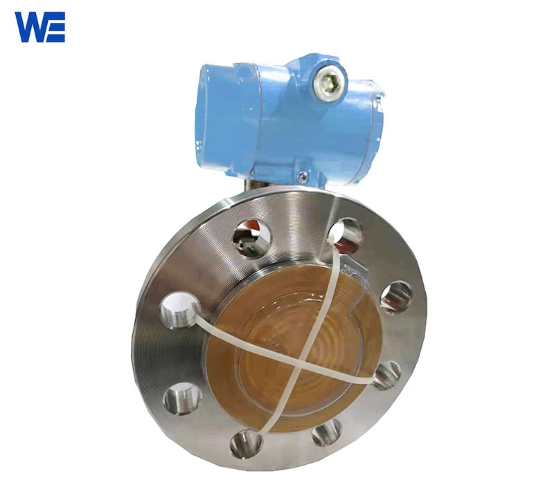
Gold plating is used as a diffusion barrier because hydrogen permeates gold more slowly than many common diaphragm materials. The gold layer does not replace the base diaphragm; it reduces the rate at which hydrogen reaches the fill fluid.
Wepower Electronic’s gold plated diaphragm pressure transmitter fits this duty. The useful point is not simply the coating. Pressure, differential pressure, and level arrangements can use direct mounting or remote capillaries, allowing the engineer to address both hydrogen diffusion and diaphragm temperature.
When Should You Use a Gold Plated Diaphragm Pressure Transmitter?
A gold-plated diaphragm should be considered if the process medium contains hydrogen, is capable of generating atomic hydrogen, or has experienced unexplained transmitter drift in service.
Hydrogen compressors, storage vessels, electrolyzer skids, refinery units, and hydrogen containing reactors are typical cases.
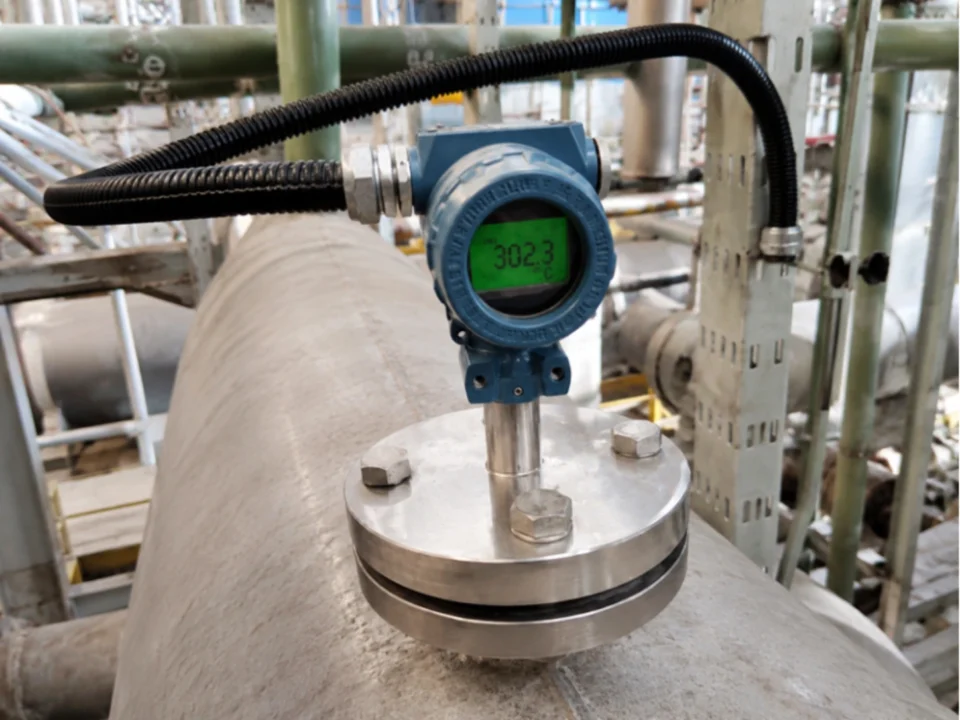
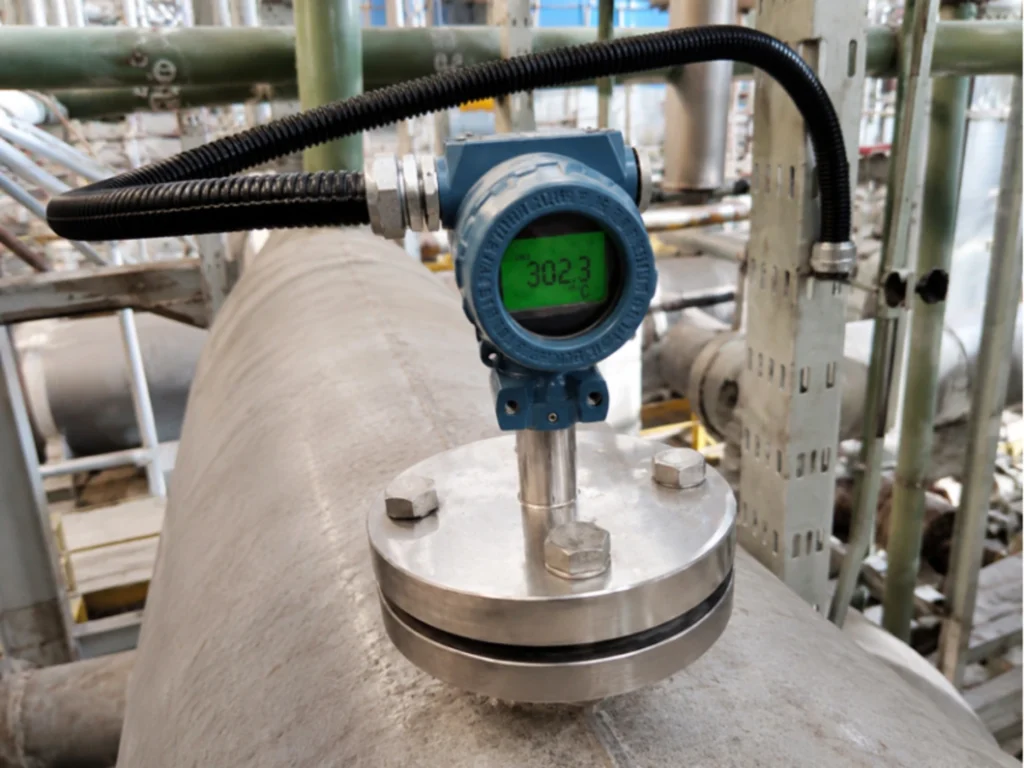
For applications where hydrogen permeation is a known concern, a gold-plated diaphragm transmitter can provide an additional diffusion barrier. For example, the Wepower Electronic WE3051LT is designed for hydrogen related pressure and level measurement and is available for gauge, absolute and differential pressure applications, with direct-mount or remote-capillary configurations.
Conclusion — Protecting Pressure Measurement in Hydrogen Service
When drift repeats and ordinary checks show nothing, examine the isolation diaphragm and operating temperature. Treat the transmitter as a filled mechanical system, not only as an electronic device.
While a gold-plated diaphragm lowers associated risks, the ultimate selection is still determined by process medium, pressure, temperature and mounting arrangement.
Before selecting a transmitter, confirm the process medium, hydrogen concentration, operating temperature, pressure range, wetted materials and installation method.
FAQ
Q: Can hydrogen permeation cause a pressure transmitter to fail?
Yes. It may begin as drift, then progress to slow response, unstable readings, diaphragm deformation, or loss of measurement.
Q: Does a gold plated diaphragm stop hydrogen completely?
Not necessarily. While it decreases the rate of permeation, overall performance is determined by coating quality, operational temperature, pressure, exposure period and the substrate material.
Q: Can recalibration fix hydrogen permeation?
Only temporarily. Recalibration corrects the output but does not remove hydrogen or gas bubbles from the fill fluid.