- Have any questions?
- +86 15953537010
- admin@wepower-electronic.com

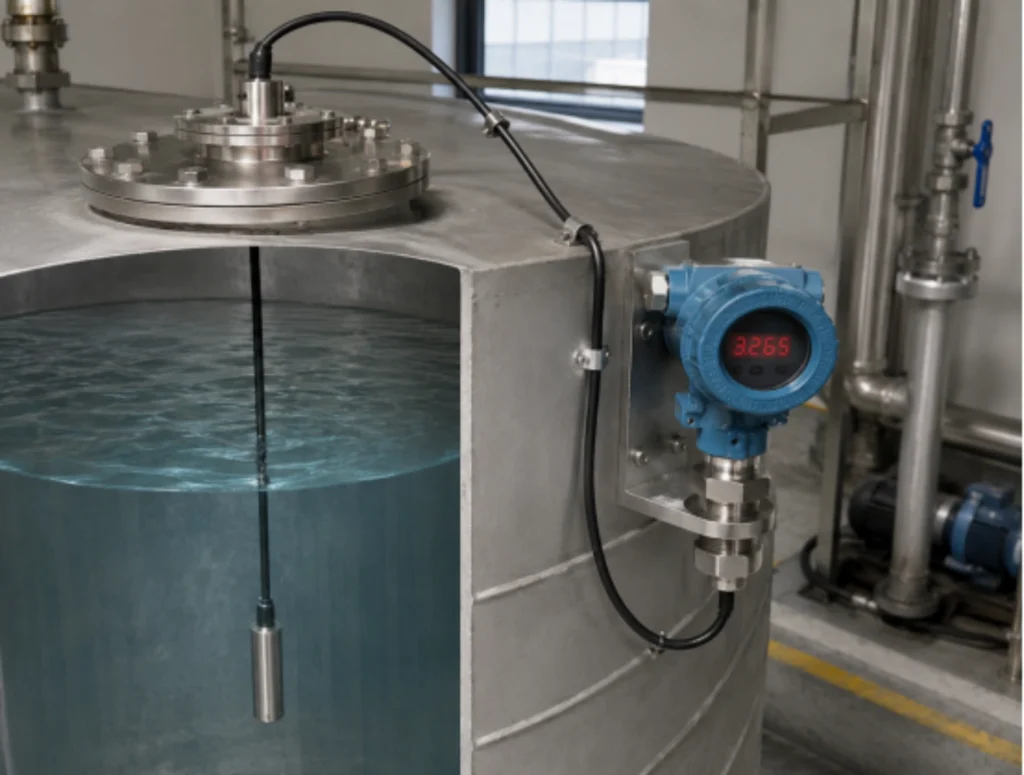
The submersible level transmitter looks easy to use—just drop the probe into water/well/tanks, attach the cable, and get level reading. However, most field faults occur before installation. Typical pitfalls are overly broad measurement ranges, inadequate cable length, and housing exposure to dampness.
Optimal instrument selection hinges on aligning the transmitter’s specifications with actual water depth, field environmental conditions, and the parameters of the matched control system.
What Should You Know About the Application Before Selecting a Transmitter?
Start with the site, not the datasheet.
A storage tank and a deep well may both contain water, but they impose different demands. A tank may have turbulence from an inlet. A well may require 60 meters of cable, strain relief, and surge protection.
Record the main application details:
- Maximum and minimum water depth
- Tank, reservoir, borehole, or well geometry
- Clean water, treated water, wastewater, or water with sediment
- Distance to the PLC, display, or data logger
- Required function, such as pump control, alarm, or level trending
- Indoor, outdoor, or underground installation
How Does a Submersible Level Transmitter Measure Water Level?
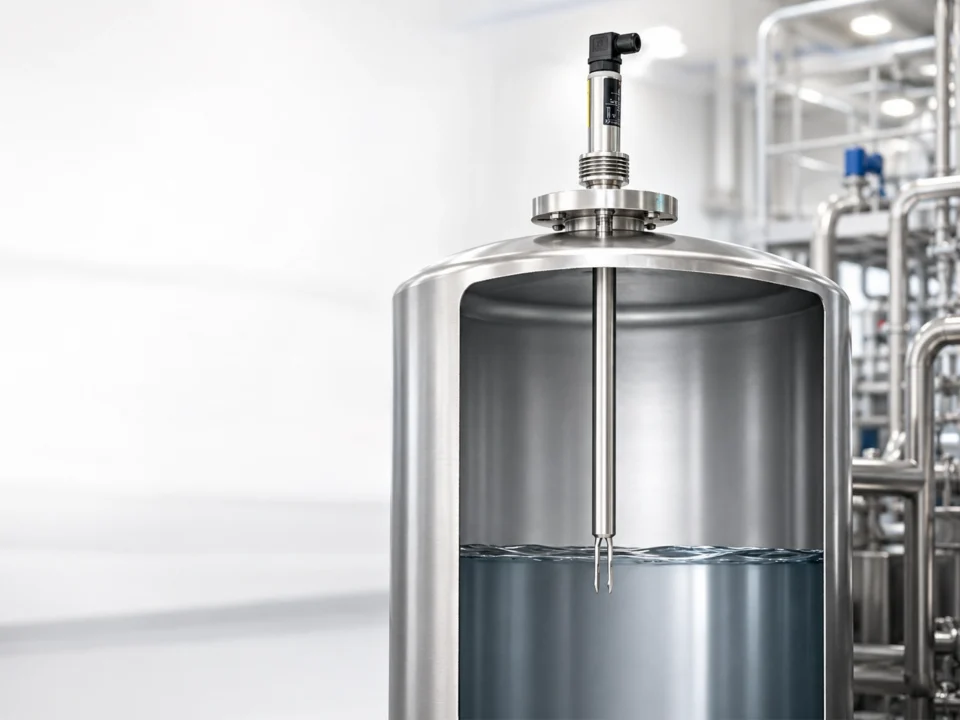
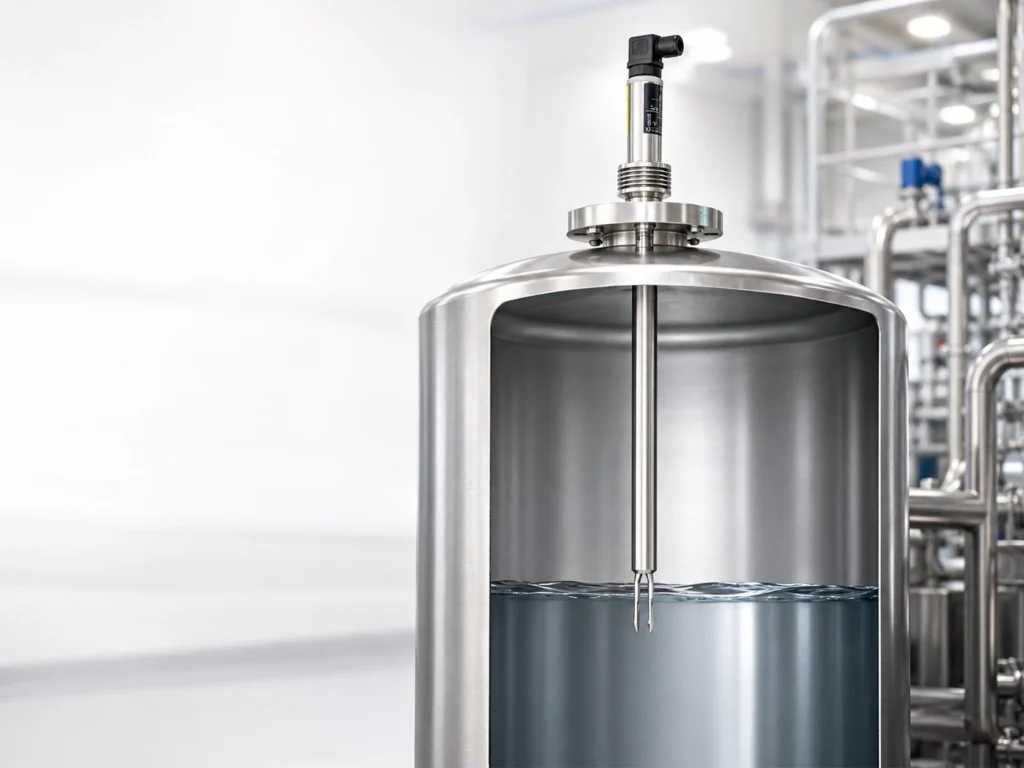
The measuring principle of hydrostatic submersible level transmitters relies on hydrostatic pressure detection. The submergence depth of the sensing probe determines the magnitude of pressure acting on the diaphragm component. The transmitter executes conversion of the collected pressure parameter into an electrical analog signal, which serves as the quantitative indicator of liquid level.
Open tanks and wells commonly use a vented cable to compensate for atmospheric pressure changes. That small vent path is easy to overlook. If moisture enters it, readings may drift or respond slowly.
Because the probe measures inside the water, it needs no clear line of sight. This suits narrow wells, covered tanks, and locations with foam or condensation.
How Do You Choose the Correct Measuring Range?
Range selection affects useful resolution. A 0–100 m transmitter can measure a 3 m tank, but most of its output span will never be used.
Choose a range that covers the maximum expected water column, with allowance for overfill, installation depth, and short pressure surges.
Selecting a Range for Water Tanks
Use vertical water depth, not tank volume. A large capacity tank may only have a 4 m water column.
For an 8 m maximum depth, a 0–10 m range is usually sensible. It leaves margin without wasting too much span. Check the actual probe position too. A probe mounted above the tank floor will not measure the liquid below it.
Keep the probe away from fast moving inlet water, which can create unstable readings.
Selecting a Range for Wells
The relevant value is the water column above the probe, not total borehole depth. A probe installed 50 m below ground may see only 12 m of hydrostatic head.
Account for static level, pumping drawdown, and seasonal change. Cable length should include the full suspension depth, the route to the junction box, and a service loop. A longer cable is manageable. A short one often leads to an awkward splice.
What Accuracy and Output Signal Does the Application Require?
Accuracy should suit the control task. Simple pump control rarely needs the same precision as inventory monitoring or dosing.
The signal must also match the receiving equipment.
| Output signal | Best suited for | Main consideration |
| 4–20 mA | PLCs and long cable runs | Good noise resistance |
| 0–10 V | Short distance systems | More sensitive to voltage loss |
| RS485 | Digital monitoring networks | Requires compatible protocol |
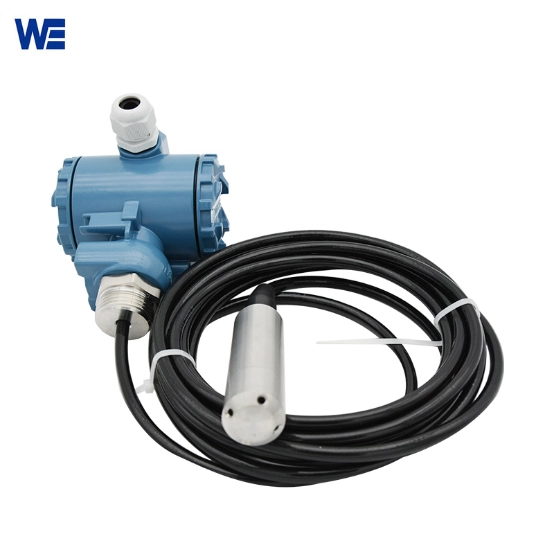
For many tanks and wells, 4–20 mA is the practical default: robust, widely supported, and easy to test. RS485 suits shared networks and digital monitoring.
Which Materials and Protection Features Should You Check?
Chlorinated tap water, brackish water, industrial wastewater and cleaning agents may cause corrosion and deterioration to sensor seals, cable outer sheaths and metallic components.
Material selection should cover every wetted component.
Wetted Materials
While stainless steel works well for numerous clean water applications, different steel grades deliver vastly different resistance. Harsh or chemically treated water demands specially matched diaphragms, housings and seal materials.
Sediment needs attention. A probe resting in sludge may respond slowly or report a false level. Raising it above the tank floor, adding a protective cage, or using an anti-clogging design often helps more than specifying tighter accuracy.
Cable and Environmental Protection
Continuous immersion calls for IP68 protection. The cable jacket should resist water absorption, abrasion, and site chemicals.
Deep wells place mechanical stress on the cable, so use proper suspension or strain relief. Outdoor installations also benefit from surge protection. Long cables can pick up energy from nearby lightning.
How Do Installation Conditions Affect the Selection?
A suitable submersible level meter can still produce poor data when installed badly.
The sensing probe shall be kept clear of sediment deposits, pump suction points, inflow jets and areas with violent turbulence. A stilling well effectively stabilizes level readings on the condition that it is equipped with permeable openings and free of trapped air pockets.
Vented cable termination must remain dry. Do not seal the vent into a wet junction box. Cable extensions need care too; an ordinary splice can block the atmospheric reference path.
Maintenance access matters. A probe that cannot be removed without dismantling the wellhead will not be inspected often. Fouling then appears as unexplained drift months later.
What Common Selection Mistakes Should You Avoid?
Common mistakes include:
- Choosing range from tank capacity instead of water depth
- Selecting a much wider range than needed
- Ordering insufficient cable length
- Ignoring sediment or turbulence
- Using unsuitable wetted materials
- Allowing moisture into the vent tube
- Choosing an output the PLC cannot accept
- Treating the electrical cable as a lifting rope
Access, stability, and maintenance often matter more than price. Draining a tank to replace a poor selection is expensive.
How Can You Make the Final Selection?
Build a short application record: maximum water depth, range, accuracy, output, materials, cable length, installation method, and environmental conditions.
Check the control panel before ordering. Confirm power supply, input type, and communication requirements. Then compare those needs with the available hydrostatic submersible level transmitter specifications.
A good choice should fit the site without improvised adapters, questionable cable joints, or unnecessary compromises. That is usually more meaningful than an impressive headline accuracy figure.
For a tank or well application, review Wepower Electronic’s submersible level transmitter specifications, or share the water depth, medium, output requirement, and cable length with the engineering team for a more practical selection.
FAQ
Q: Can one submersible level transmitter be used for both tanks and wells?
Yes, when the range, cable length, materials, and mounting method suit both applications. Wells usually need longer cables, better strain relief, and surge protection.
Q: Is 4–20 mA better than RS485?
Not always. 4–20 mA is simpler for conventional industrial control. RS485 is useful for digital networks and remote data collection.
Q: How high above the tank bottom should the probe sit?
It should remain above expected sediment while staying below the lowest measured level. Dirty water tanks often need a bracket or protective cage.
Q: What is the recommended inspection frequency for the level transmitter?
Clean water installations may need only periodic checks. Wastewater and sediment heavy sites should be inspected more often for fouling, cable damage, vent moisture, and zero drift.