- Have any questions?
- +86 15953537010
- admin@wepower-electronic.com

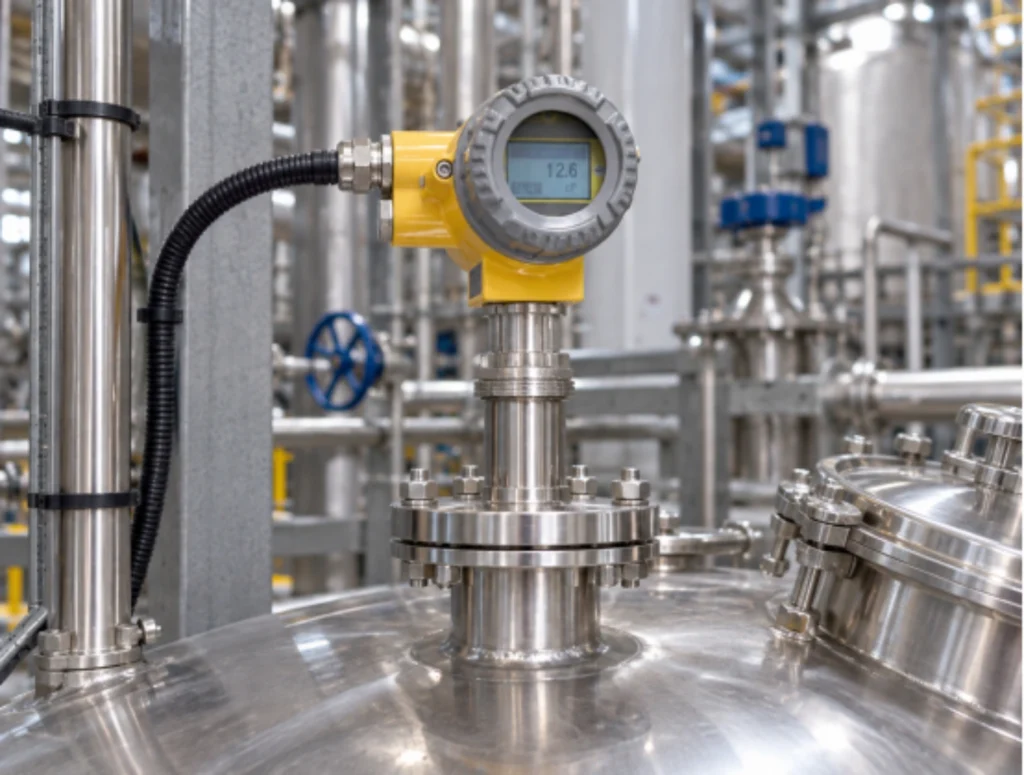
Liquid viscosity has an impact on the state of liquid held in tanks, flow regimes in piping systems, pump operational load, and whether end products satisfy specification requirements.
Laboratory testing remains useful for batch release, but it cannot always show what is happening inside a hot transfer line or mixing vessel. Online measurement provides a live signal so operators can correct a drift before it becomes a rejected batch.
Why Viscosity Control Is Critical in Chemical Plants
Chemical liquids change during production. Temperature rises during heating. Solvent ratios shift during blending. Polymer chains develop as a reaction progresses.
The consequences are practical. A resin that becomes too viscous may overload a pump. A coating that is too thin may run instead of forming an even film.
Continuous monitoring helps reduce off-specification batches and supports tighter dosing. The number on the display is useful when it leads to a process decision.
Define Your Process Requirements Before Choosing a Viscosity Sensor
A sensor should be selected around the fluid and the installation. These questions narrow the choice quickly.
Understand the Fluid’s Rheological Behavior
Determine whether the fluid is Newtonian or non-Newtonian. Solvents can maintain a stable relationship between shear and viscosity. For polymer solutions, paints, adhesives and slurries, their apparent viscosity varies under flow or agitation.
Shear sensitivity matters because a laboratory spindle result may not match pipeline conditions. Solids can create abrasion. Some products also coat the sensor surface.
Specify the Measuring Range and Operating Conditions
Define the minimum, normal, and maximum viscosity values in cP or mPa·s. Allow room for startup and upset conditions. Record temperature and pressure. A reading at 40°C cannot be compared casually with one at 70°C.
Check Chemical Compatibility and Safety Requirements
Wetted materials must match the process medium and the cleaning procedure. Stainless steel may be suitable for one service. Another may require PTFE, PFA, Hastelloy, or a material selected by the process engineer.
Evaluate corrosion resistance, abrasion resistance and media fouling characteristics. For hazardous locations, confirm explosion protection or flameproof requirements prior to PO release.
Plan for Control-System Integration
Verify the site’s required output signal type: 4–20 mA, HART, Modbus RS 485, or other communication protocols. A high-viscosity alarm may initiate temperature verification or dosing correction actions.
Comparing Viscosity Measurement Technologies
Different technologies answer different process questions. The choice depends on the fluid and the installation.
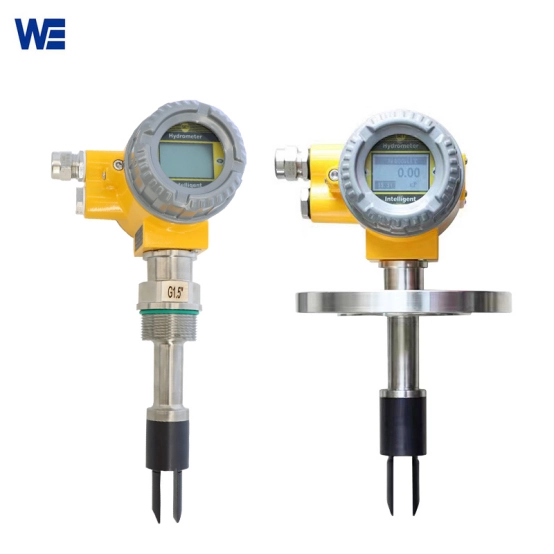
Tuning Fork or Vibration Viscosity Meters
A tuning fork or vibration meter detects how the surrounding fluid affects a vibrating element. This design can provide continuous inline or insertion measurement without a rotating spindle in the process.
It can suit a live process signal and has relatively few moving parts. Fouling and calibration still need attention.
Rotational Viscometers
Rotational instruments measure the torque required to move a spindle through the fluid. They are common in laboratories because test conditions can be controlled closely. They also suit products that must be measured at a defined shear rate.
For continuous installation, the mechanical arrangement may be more demanding. Cleaning deserves review.
Combined Density and Viscosity Measurement
Some processes benefit from seeing density and viscosity together. The combination can help track concentration or blending progress when viscosity alone cannot reveal the cause of a change.
Key Criteria for Selecting an Industrial Viscosity Sensor
The data sheet matters. So do the installation details.
Accuracy and Repeatability
Accuracy describes closeness to a reference. Repeatability describes consistency under the same conditions. For closed-loop control, repeatability can be more valuable than a laboratory specification that cannot be reproduced in the plant.
Wetted Materials and Chemical Resistance
Match sensor materials with the process fluid and cleaning chemicals. Check corrosion, abrasion, and coating risk before ordering.
Installation Design
Choose between inline, insertion, side-mounted, or top-mounted installation. Pipe diameter and access will limit the options. A bypass or tee can help when the main line is too small.
Temperature Compensation
Temperature compensation is not cosmetic. A thermal viscosity shift can look like a formulation problem. Integrated temperature measurement helps separate the two.
Communication and Diagnostics
Check outputs, local display, and diagnostics. They can identify a fouled probe, unstable flow, or wiring issue before operators trust a bad value.
Calibration and Lifecycle Support
Ask how calibration is performed and how often verification is recommended. Spare parts and technical response time affect ownership cost.
Installation and Integration Best Practices
Install the sensor where the fluid represents the process. Avoid dead legs, stagnant zones, excessive vibration, and gas bubbles.
The sensor needs enough immersion and a suitable flow condition. If direct installation is impractical, a tee or bypass can give better access. Confirm connection, seal, pressure, and temperature ratings before commissioning.
After connection to the PLC, DCS, or SCADA system, define realistic alarm limits. Compare the initial result with a trusted laboratory method.
Chemical Processing Applications for Online Viscosity Measurement
Online viscosity measurement is useful in polymer and resin production where reaction progress changes product structure. It also supports lubricant and additive blending.
Paints, coatings, adhesives, asphalt, bitumen, and fuel oils also depend on stable viscosity and temperature control.
How Wepower Electronic Supports Chemical Process Measurement
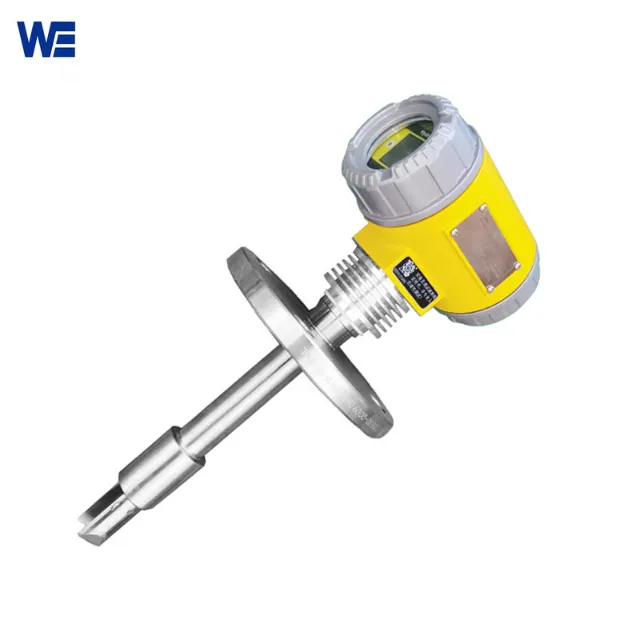
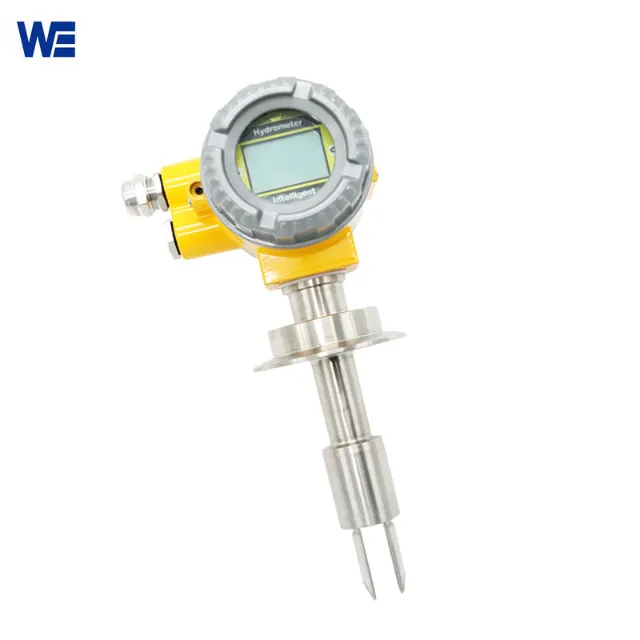
Wepower Electronic supplies industrial measurement instruments for process applications, including the Micro Vibration Viscosity Meter. Its direct-insertion tuning fork design is intended for continuous viscosity and density measurement in process liquids.
The product information covers lubricants, asphalt, and refined products. Engineers can review viscosity range, wetted materials, process connections, and communication outputs. When density also matters,Wepower Electronic’s online density meter for chemical processes provides a related path.
For a quotation, provide the process medium, range, temperature, pressure, pipe size, installation preference, and required signal. The density and viscosity meter brochure can support an EPC or procurement review.
Conclusion: Select the Sensor Around the Process
The correct viscosity sensor is the one that stays useful in the real process. Fluid behavior comes before catalogue features. Materials, temperature, installation, communication, and service support affect the result.
For an inline or online measurement project, contact Wepower Electronic with the process data and the control objective. A clear application brief usually produces a better recommendation than a request based only on the word “viscosity.”
Frequently Asked Questions
Q: What is the difference between an online and laboratory viscosity meter?
An online meter measures continuously in the process. A laboratory meter tests a collected sample under controlled conditions.
Q: How does temperature affect viscosity measurement?
Many liquids become less viscous as temperature rises. Temperature compensation helps distinguish thermal changes from composition changes.
Q: What information is needed to select a in-line process viscometer for a chemical process?
Provide the fluid, viscosity range, density, temperature&pressure, installation method, pipe size, output signal, etc.