- Have any questions?
- +86 15953537010
- admin@wepower-electronic.com

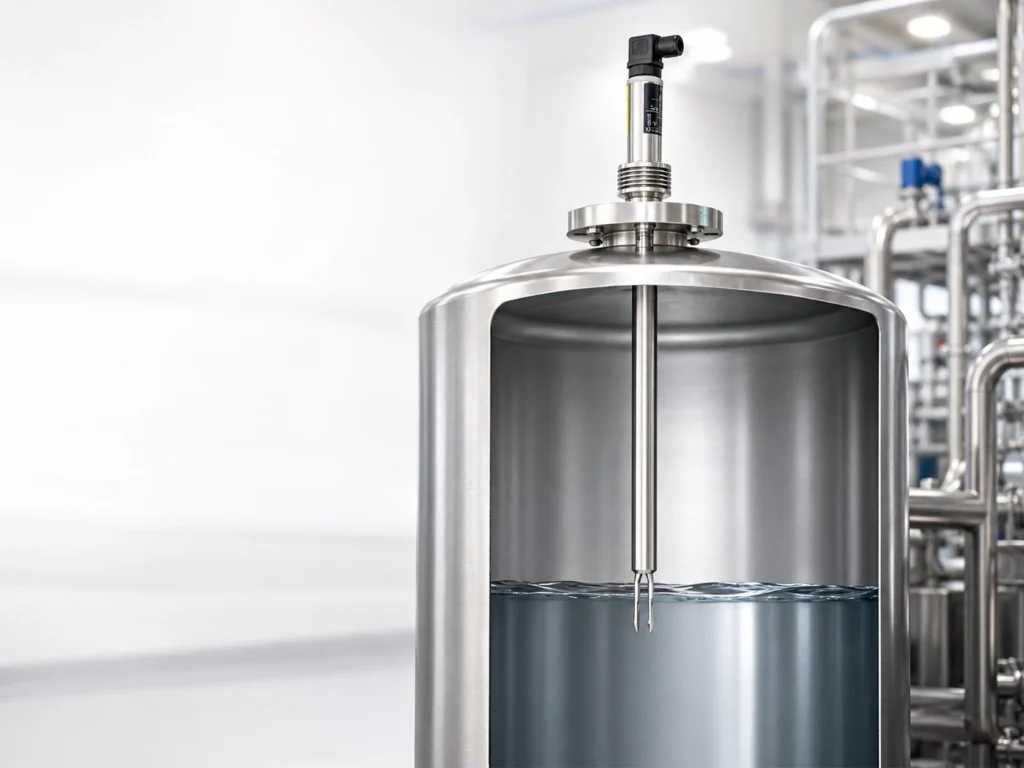
Level detection sounds simple until the required switching point is far from the available process connection.
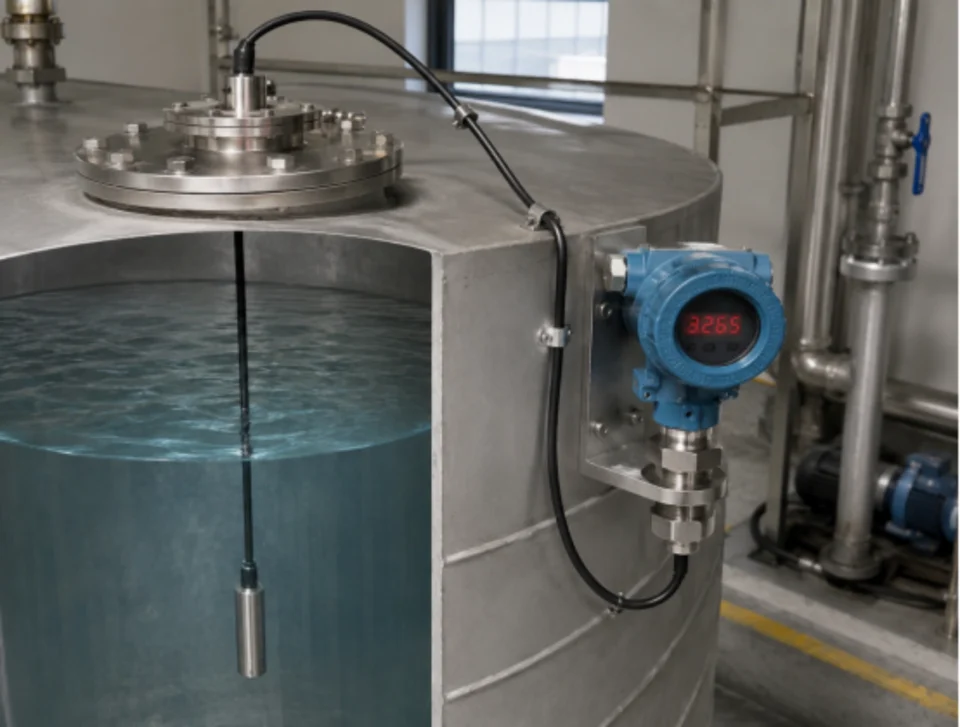
A tank may only allow top mounting, while the actual alarm point sits much deeper inside the vessel. A silo may have no suitable side opening. In these cases, an extension tube vibrating level switch provides a practical solution by moving the vibration fork farther from the mounting position.
This extended type adopts the same vibration sensing principle as conventional vibrating fork level switches, yet delivers enhanced installation flexibility.
What Is an Extension Tube Vibrating Level Switch?
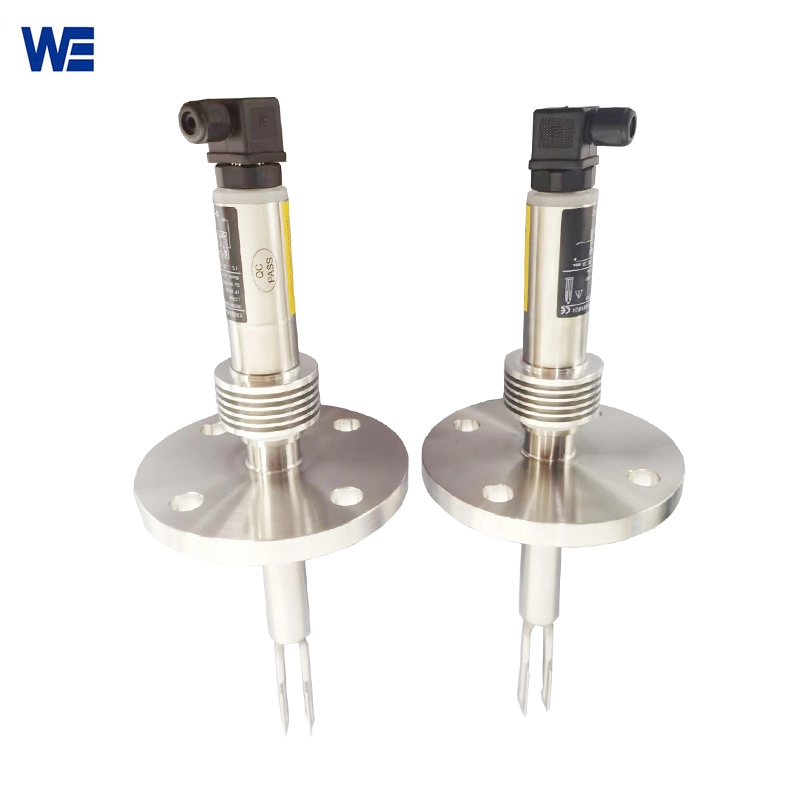
An extension tube vibrating level switch is a point-level detection device that uses a vibrating tuning fork installed at the end of an extended tube.
The extension tube does not change the sensing principle. It simply places the fork at the required switching depth. This design is useful in tanks, process vessels, silos, and hoppers where the sensing point is far from the mounting connection. Unlike a continuous level transmitter, the switch does not measure the entire material level. It only detects whether liquid or bulk material has reached a specific point.
Typical functions include high-level alarms, low-level detection, overfill protection, and pump control.
How Does an Extension Tube Vibrating Level Switch Work?
This level switch monitors changes in the tuning fork vibration. Despite its simple working principle, careful sensor selection is still essential.
The Tuning Fork Vibrates at Its Resonant Frequency
Piezoelectric elements excite the tuning fork and keep it vibrating at a defined resonant frequency. When the fork is free, the electronics recognize its normal vibration condition.
There are no floats moving inside the vessel and no rotating paddles. This relatively simple mechanical design is one reason vibrating level switches are widely used in industrial point-level applications.
The Medium Changes the Vibration
When liquid, powder, or bulk material reaches the fork, the vibration changes. The surrounding medium affects the frequency or amplitude of the fork. The electronics detect this change and determine that material is present.
The actual response depends on the process medium. Water, viscous fluids, fine powders and dense granules exhibit distinct behavioural characteristics. Material density, viscosity, build up tendency and particle properties shall therefore be taken into account for instrument selection.
Electronics Convert the Change into a Switching Signal
Once the vibration change is detected, the electronics change the output state.
The signal can be sent to a PLC, relay, alarm system, pump, or valve. Depending on the model, outputs may include SPDT, PNP, NPN, or NAMUR. In a high-level alarm application, for example, the switch remains in its normal state while the fork is uncovered. When material reaches the fork, the output changes and the control system can stop filling the tank.
Why Use an Extension Tube Instead of a Standard Vibrating Level Switch?
A standard vibrating level switch works well when the sensing point is close to the process connection. When the required level is much deeper inside the vessel, the extension tube becomes useful.
Flexible Switching Point Position
The main advantage is sensing depth.
The extended tube allows the tuning fork to be positioned farther inside the vessel. The insertion length can be selected according to the required alarm or control point.
This is especially useful in tall tanks where the connection is located at the top but the desired low-level or intermediate switching point is much lower.
Easier Top-Mounted Installation
Top mounting can avoid extra vessel penetrations and simplify installation in crowded process areas. Side mounting is not always practical. Piping, insulation, platforms, or structural components may block access. An extension tube mounted from the top can often reach the required sensing point without modifying the vessel wall.
Better Adaptation to Process Requirements
The extension length can be matched to the actual operating level.
Applications may include high-level alarms, low-level detection, pump protection, and process interlocks. Tank height alone should not determine the insertion length. Nozzle depth, internal structures, buildup, and the real operating level also need to be checked.
Small installation details matter.
Where Are Extension Tube Vibrating Level Switches Used?
These switches are used across many process industries. The application usually depends more on the medium and installation condition than on the industry name.
Liquid Tanks and Process Vessels
In liquid service, extension tube vibrating level switches can be used for high-level alarms, low-level detection, dry-run protection, and pump control.
They are particularly useful when the required switching point is below a top-mounted connection. A common example is a process vessel with a continuous level transmitter and a separate vibrating switch used as an independent high-level alarm.
Powders and Bulk Solids
Vibration operated switches are also applicable to silos, hoppers and storage vessels handling powders or granular materials. Typical applications comprise high level alarm, empty bin detection and material demand signalling. For bulk solids, minimum material density and buildup tendency should be checked carefully.
Difficult Process Media
Sticky, abrasive, coating, or low-density materials can be more demanding. A vibrating design may still work well, but fork geometry, material compatibility, insertion length, and installation orientation should match the process. Choosing the correct sensing principle is only part of the job.
Key Benefits of an Extension Tube Vibrating Level Switch
An extension tube vibrating level switch offers several practical advantages:
- Flexible sensing depth
- Reliable high- and low-level detection
- No float mechanism or rotating paddle
- Convenient top-mounted installation
- Different electrical output options
- Stainless steel wetted parts for many applications
- Multiple process connection options
For many installations, the biggest benefit is simple: the sensing fork can be placed where it is actually needed.
How to Choose the Right Extension Tube Vibrating Level Switch
Start with the process conditions rather than the model number.
Check the required insertion length, medium, temperature, pressure, connection type, and electrical output. For powders and bulk solids, review minimum density and the possibility of material buildup. For liquids, consider viscosity, coating behavior, and turbulence near the fork.
The fail-safe logic also matters. A high-level shutdown may require a different switching arrangement from a low-level pump protection function. Before ordering, provide the manufacturer with the vessel dimensions, mounting position, switching level, process medium, temperature, pressure, and preferred output signal.
That usually prevents avoidable selection problems.
Extension Tube Vibrating Level Switch from Wepower Electronic
Wepower Electronic provides extension tube vibrating level switches for industrial point-level detection in tanks, vessels, silos, and process equipment. Available configurations can include different insertion lengths, stainless steel wetted materials, process connections, and electrical outputs such as SPDT, PNP, NPN, and NAMUR.
For applications where the sensing point is far from the mounting position, the extension design allows the vibrating fork to reach the required level without changing the basic detection principle. Application conditions should be reviewed before the final model is selected.
Looking for a vibrating level switch for your tank, silo or process vessel?
Explore Wepower Electronic’s Extension Tube Vibrating Level Switch or contact our team for application-specific selection assistance.
Frequently Asked Questions
Q: What is the difference between a standard and extension tube vibrating level switch?
The sensing principle is similar. The main difference is the distance between the process connection and the tuning fork. An extension tube allows the sensing point to be positioned deeper inside the vessel.
Q: Can a vibrating fork level switch detect both liquids and solids?
Yes. Vibrating level switches are suitable for use with both liquids and bulk solids. Proper model selection is determined by material density, viscosity, build up tendency, particle properties and process conditions.
Q: How long can the extension tube be?
The available extension length depends on the specific model and application. It should be selected according to the required switching point, vessel geometry, nozzle dimensions, and installation conditions.
Q: Where should a vibrating level switch be installed?
It can be installed from the top or side of a vessel. Extension tube versions are especially useful for top mounting when the required switching point is well below the process connection.