- Have any questions?
- +86 15953537010
- admin@wepower-electronic.com

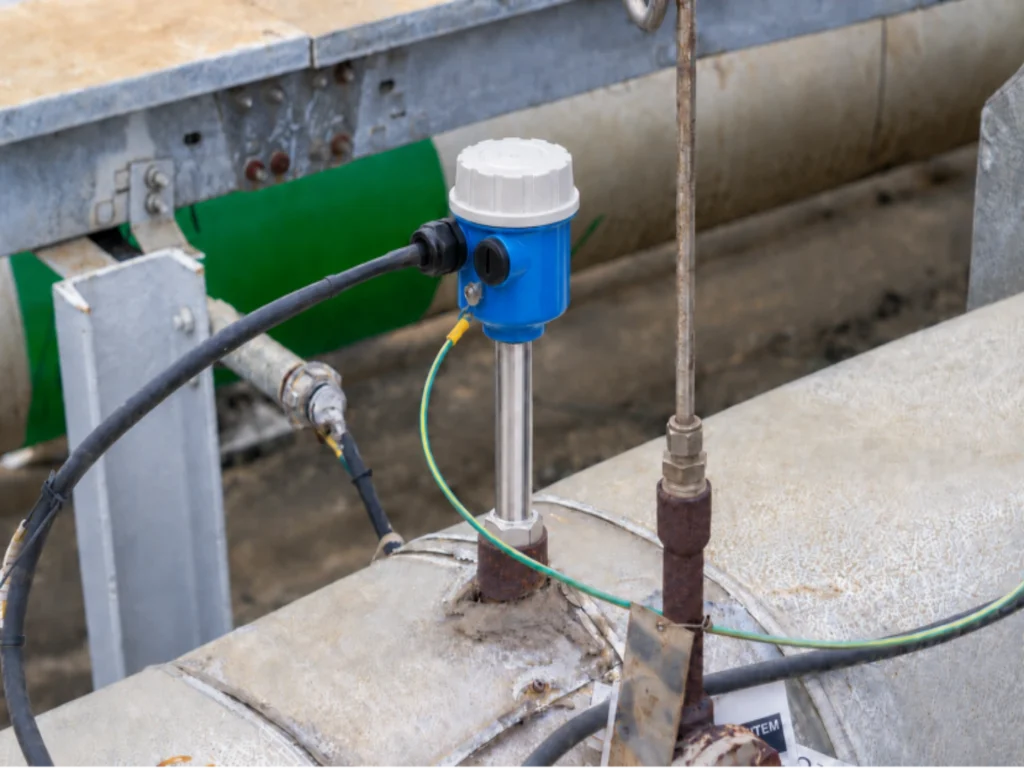
An RF admittance level switch answers one practical question: has the material reached this point or not?
That sounds simple. In a real plant, it is not always simple. Liquids foam. Powders create dust. Slurries coat probes. Granules bridge inside hoppers. A switch that works in clean water may struggle in cement, ash, resin, or sticky chemical service.
That is where RF admittance technology earns its place. It gives a stable point level signal without moving parts inside the vessel.
What Is an RF Admittance Level Switch?
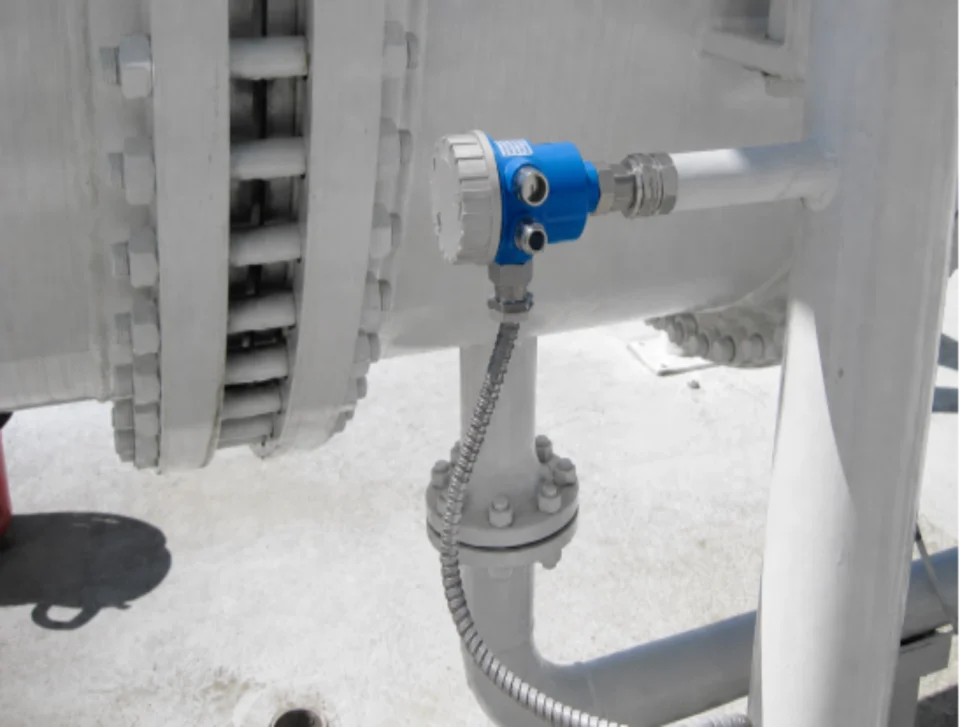
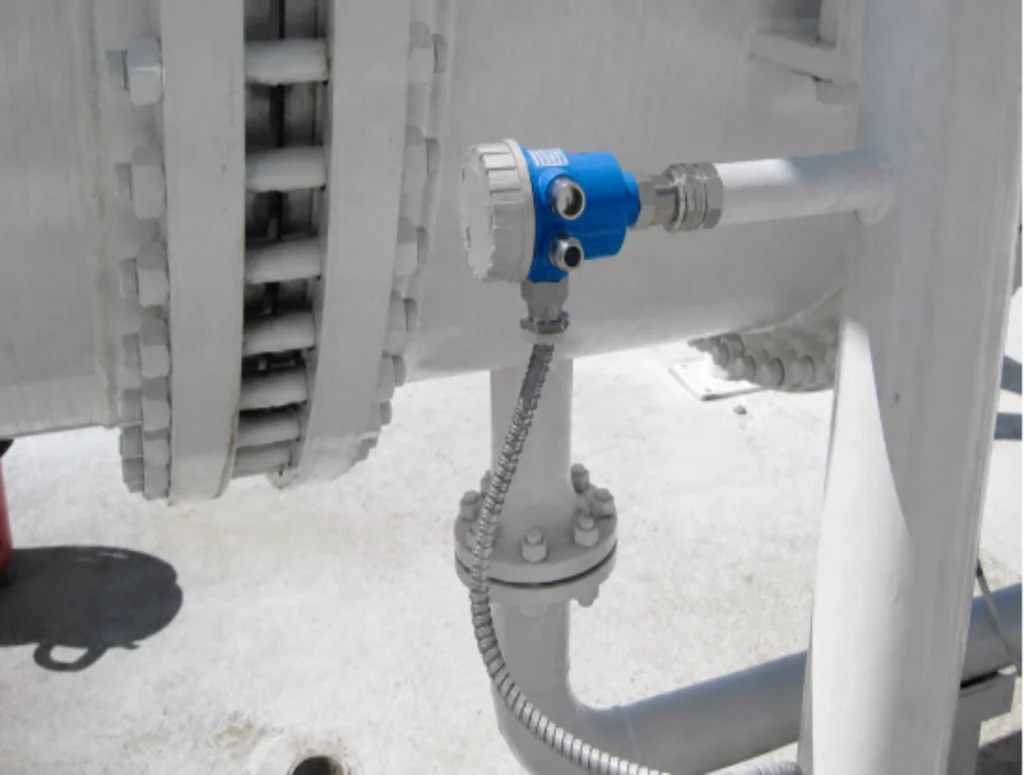
An RF admittance level switch is a point level detection instrument. This admittance point level switch perceives when liquids, powders, slurries, pellets or bulk solid materials arrive at a predetermined position inside the tanks, silos, hoppers or process containers.
It is not normally used to show the full level from empty to full. That is the job of a continuous level transmitter. An RF admittance level switch gives an on/off signal at a selected point.
Typical uses include:
- Highlevel alarm in a tank or silo
- Lowlevel alarm in a hopper
- Overflow prevention during filling
- Pump dryrun protection
- Start/stop control for valves, pumps, or conveyors
For many systems, this is enough. A powder silo alarm does not need the exact fill percentage. It only needs to switch before overfilling starts.
How Does an RF Admittance Level Switch Work?
The working principle is based on radio frequency electrical sensing. A probe extends into the vessel, and the electronics monitor the electrical condition around that probe.
When the probe is surrounded by air, the instrument sees one condition. When product reaches the probe, the condition changes. The switch detects that change and sends an output signal to a PLC, alarm panel, relay circuit, or pump control system.
Admittance quantifies the transmissive ease of electrical signals across a medium or closed loop; larger admittance magnitudes correspond to superior current conductivity. Variations in the medium distort the probe’s peripheral electric field, which the measuring instrument senses and processes as a level signal.
Typically, the changeover procedure is straightforward.
What Happens When the Material Reaches the Probe?
A normal sequence looks like this:
- Material rises inside the vessel.
- It touches or surrounds the sensing probe.
- The electrical response around the probe changes.
- The relay or output changes state.
- The control system takes action.
That action may stop filling, start a conveyor, shut down a pump, or trigger an alarm. The device is small, but the signal can protect a much larger process.
Where Is an RF Admittance Level Switch Commonly Used?
RF admittance Type level switches are useful where the medium is not clean, calm, or easy to measure. Clean water is easy. Dusty powder, wet sludge, sticky resin, or hot liquid is a different job.
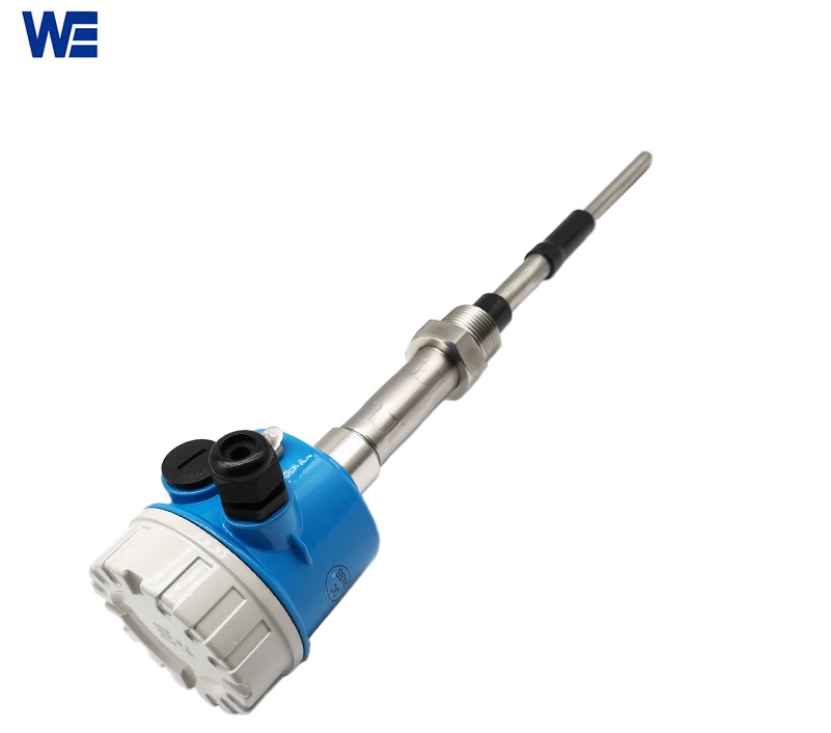
Common applications include:
- Chemical tanks:point detection for process liquids
- Cement silos:high level detection during powder filling
- Food and grain storage:flour, sugar, feed, or granular materials
- Wastewater treatment:sludge tanks and pump protection
A cement silo is a good example. During pneumatic filling, dust moves everywhere before the actual product level reaches the top. A mechanical switch may chatter, jam, or wear. An RF admittance switch, installed away from the inlet path and adjusted with the real material, is often a better choice.
What Are the Main Advantages of RF Admittance Level Switches?
The strongest advantage is simple: no moving parts inside the process. In harsh industrial service, that matters.
Key benefits include:
- Works with many liquids, powders, granules, and slurries
- Provides clear point level detection for alarms and control
- Reduces mechanical wear compared with paddle or float switches
- Performs well in many dusty or vaporfilled environments
- Connects easily to PLCs, alarms, and relay circuits
This does not make the technology perfect. It still needs correct selection, grounding, sensitivity adjustment, and installation.
How Is RF Admittance Different from Other Level Switch Technologies?
The better question is not which level switch is best. It is which one is least likely to fail in the actual material.
| Technology | Best For | Main Strength | Limitation |
| RF Admittance | Liquids, powders, slurries | Versatile, no moving parts | Needs proper setup |
| Tuning Fork | Clean liquids, some solids | Simple and reliable | High viscosity, prone to clumping, large solid pieces |
| Rotary Paddle | Powders and bulk solids | Economical | Mechanical wear or jamming |
| Float Switch | Clean liquids | Low cost | Poor fit for sticky media |
| Capacitance | Liquids and solids | Similar sensing principle | May struggle with buildup |
RF admittance deserves attention when the process involves powder, coating, dust, vapor, or changing material conditions. For clean liquid service, a simpler switch may be enough.
What Should You Consider When Choosing an RF Admittance Level Switch?
When choosing level instruments, always prioritize your on-site process media first instead of simply referencing catalogs. The same sensor will perform differently when measuring water, fly ash, resin pellets or dense slurry.
Check these points before choosing a model:
- Material type and dielectric properties
- Buildup risk on the probe
- Process temperature and pressure
- Probe length and mounting position
- Output signal and power supply
- Probe material, insulation, and process connection
Small details matter. A probe placed under a filling inlet may detect falling product instead of the real level. A probe too close to an agitator may switch unpredictably.
How Do You Install an RF Admittance Level Switch Correctly?
Installation has a large effect on reliability. The sensor should detect the process level, not turbulence, impact, buildup, or poor grounding.
Useful practices include:
- Install the probe at the actual alarm or control point.
- Avoid direct impact from incoming material.
- Keep distance from agitators, baffles, and vessel walls.
- Seal the process connection correctly.
- Follow grounding requirements.
- Set sensitivity with the real material.
- Test the output before connecting automatic control.
In powder applications, probe location is especially important. In liquid tanks, foam and coating need attention.
What Problems Can RF Admittance Level Switches Help Prevent?
A level switch can help prevent tank overflow, pump dry running, hopper shortage, silo overfilling, false alarms, and unplanned shutdowns.
The real value is not the switch output itself. The value is that the control system receives a dependable signal at the right moment.
Wepower Electronic provides industrial RF admittance level switches designed for stable detection in demanding process environments. No matter if you need high level alerts, low level protection, overflow control or pump dry run prevention, our team is ready to match you with perfectly suited probes, wetted materials, process connections and output setups for your specific application.
Contact Wepower Electronic today to discuss your level measurement requirements and find a dependable solution for your plant.
FAQ
Q: Can Wepower’s RF admittance level switch detect both liquids and powders?
Yes. Wepower RF admittance type level switch can be used for liquids, powders, granules, slurries, and some bulk solids, depending on material properties, probe design, and installation.
Q: Is an RF admittance level switch used for continuous level measurement?
Usually no. It is mainly used for point level detection, such as high level alarm, low level alarm, overflow prevention, or pump protection.
Q: Is RF admittance the same as capacitance level measurement?
They are related, but RF admittance usually has more advanced signal handling for industrial point level detection, especially where buildup or changing process conditions may appear.