- Have any questions?
- +86 15953537010
- admin@wepower-electronic.com

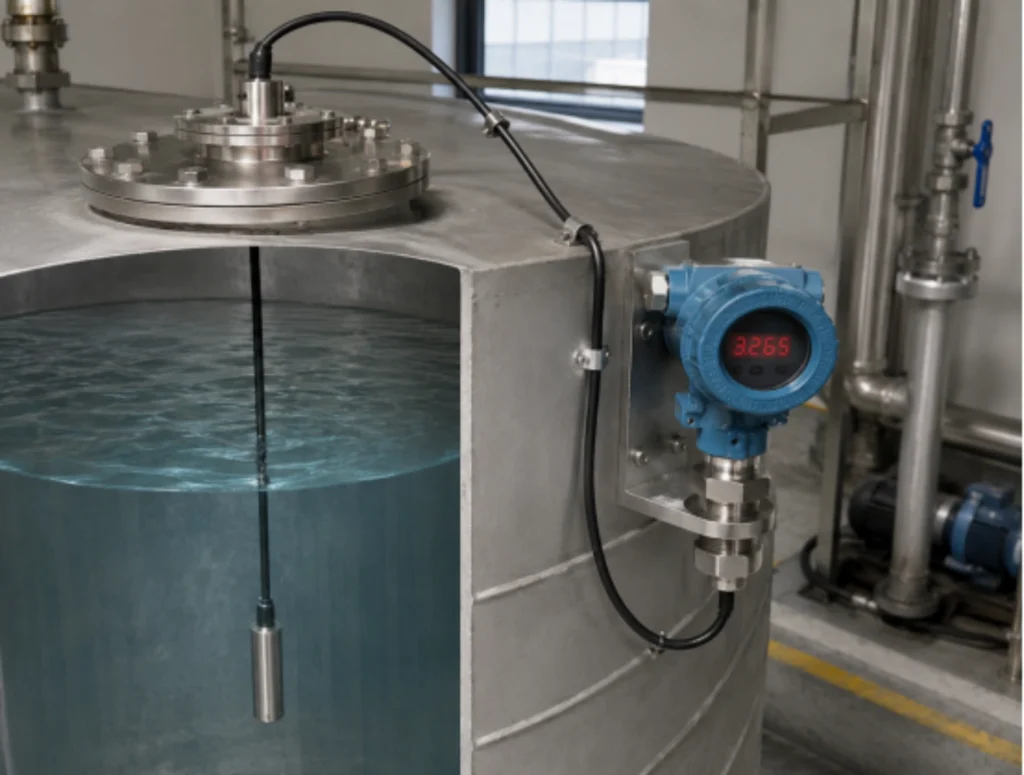
Conductivity measurement may appear straightforward from datasheets: simply immerse the sensor in liquid, capture and display the reading, and transmit it to users’ control system. In real world plant environments, however, sensor selection is seldom so uncomplicated. A transmitter delivering reliable performance for purified water can prove unsuitable for dirty chemical process lines.
What Is a Conductivity Transmitter?
A conductivity transmitter receives raw input from a conductivity sensor, translates these signals into practical process readings, compensates for temperature related drift, and delivers final measurement data to displays, PLCs or DCS control systems.
The sensor is exposed to the process. The transmitter does the processing and may also provide analog output, relays, alarms, diagnostics, and digital communication.
1. Determine Your Conductivity Measurement Range
Start with the real operating range, not just the normal value.
While high purity water has very low conductivity, wastewater, brines, cleaning solutions and chemical blends can produce substantially higher readings. For a process line with a normal operating point of 2 mS/cm that surges to 80 mS/cm during cleaning, your instrumentation must be chosen to cover both scenarios.
Check minimum, normal, and maximum conductivity, then confirm that the transmitter and sensor combination covers them with useful resolution.
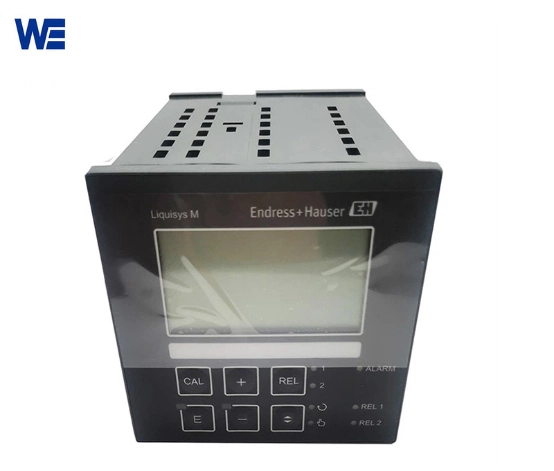
The Endress+Hauser CLM223 conductivity transmitter supports an extensive conductivity measuring range up to 600 mS/cm, with inductive mode measurements extendable to 2000 mS/cm. The actual measurable range is determined by whether the unit is configured for conductive or inductive measurement. Therefore, proper matching between sensor and order code is critical.
2. Choose the Right Conductivity Sensor Type
Sensor technology often decides whether the measurement stays dependable after months in service.
Contacting Conductivity Sensors
Contacting sensors use electrodes exposed to the liquid. They are commonly used for clean water, purified water, and low to medium conductivity service.
They are sensitive at the low end, useful in rinse water or purified water systems where small ionic changes matter. The weakness is fouling. Deposits on the electrodes can shift the reading.
Wepower Electronic recommends conductive sensors for low conductivity pure and ultrapure water applications.
Inductive Conductivity Sensors
Inductive, or toroidal, sensors avoid exposed measuring electrodes and are often preferred for higher conductivity, fouling liquids, aggressive chemicals, or processes where electrode coating is common.
The CLM223 platform is documented for conductive and inductive sensors, depending on configuration. That does not mean any sensor can be connected to any CLM223 order code. Compatibility should be checked before purchase.
3. Consider Temperature Compensation
Conductivity changes with temperature, sometimes enough to confuse what is actually happening in the process.
A transmitter should support the temperature measurement and compensation method required by the application. CLM223 documentation includes linear compensation and application specific compensation curves, with a standard reference temperature of 25 °C.
Consider a wash line switching from ambient water to hot caustic. Conductivity may rise because concentration changed, temperature changed, or both. Poor compensation makes those effects difficult to separate.
Temperature input also needs attention when selecting the sensor.
4. Check Output Signals and Communication Protocols
The measurement has to go somewhere.
For a small skid, 4–20 mA may be enough. A larger plant may want HART or PROFIBUS for configuration, diagnostics, or integration with an existing automation architecture.
The E+H CLM223 Conductivity Transmitter supports 0/4–20 mA, HART, and PROFIBUS options. This suits plants where the conductivity loop must fit an established control standard.
Check the PLC or DCS input, protocol, power arrangement, relays, and required outputs before ordering. Small specification mistakes here often become expensive panel changes.
5. Evaluate Installation and Environmental Conditions
A transmitter can be electrically correct and still be wrong for the installation.
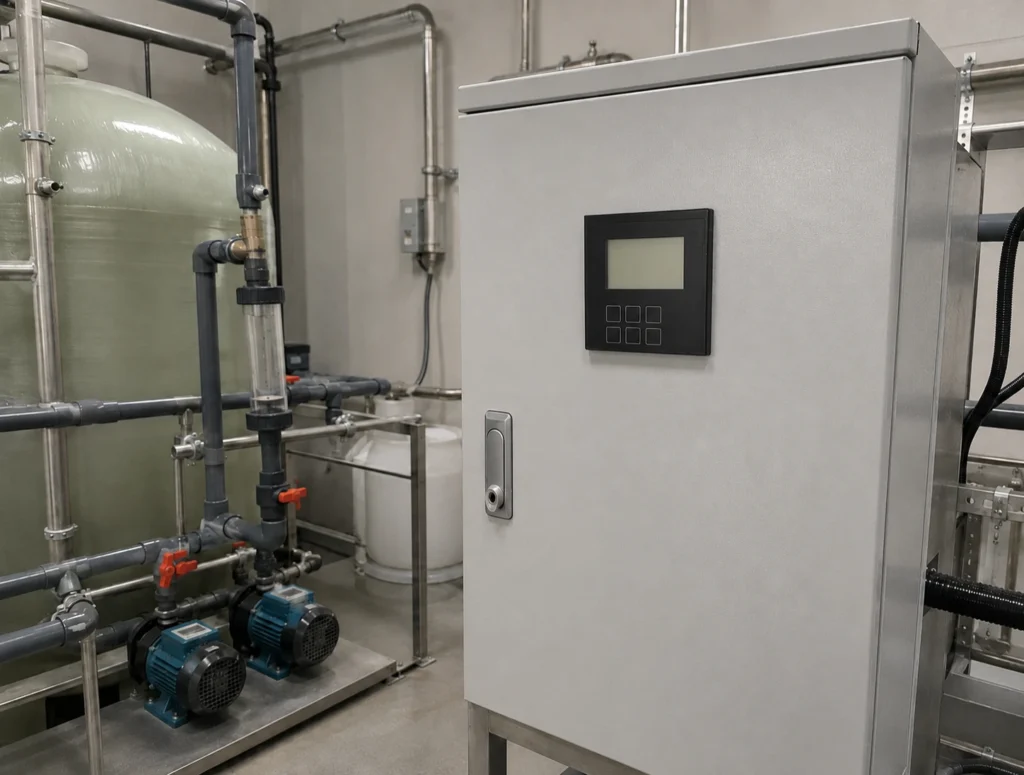
A clean control cabinet is very different from a washdown wall beside a tank. Direct spray, corrosive vapor, heavy dust, or hazardous area requirements may require another enclosure or product choice.
This is easy to overlook on retrofit jobs. The old transmitter fits the panel cutout, so the replacement looks obvious. Then someone notices the cabinet has been moved closer to the process line. Same instrument position on the drawing. Very different environment in practice.
6. Consider Calibration, Maintenance, and Diagnostics
Maintenance features matter after commissioning, which is why they are easy to underrate during purchasing.
Look for accessible calibration, clear fault indication, configurable alarms, and useful sensor checks. That can help separate a stable process from a coated or failed sensor. It does not replace inspection, but troubleshooting becomes less blind.
For plants where conductivity is tied to dosing, separation, or cleaning control, this matters. A frozen measurement that still looks believable on the HMI can cause more trouble than an obvious instrument fault.
7. Match the Transmitter to Your Industry and Application
There is no universal “best” conductivity transmitter. The useful one fits the medium, range, sensor, temperature, installation, and control philosophy.
Water treatment may use conductivity to watch treatment performance or ionic load. Wastewater needs more tolerance for fouling and variation. Food and beverage plants often care about cleaning transitions. Pharmaceutical water systems emphasize low conductivity monitoring. Chemical plants may push sensors toward aggressive media, high conductivity, and wider temperature swings.
The E+H CLM223 Conductivity Transmitter is suitable for chemical, food and beverage, power energy, water and wastewater treatment, and metal applications. Its wide range of applications means that configuration must still be tailored to the process
Conductivity Transmitter Selection Checklist
Before issuing a purchase order, confirm:
- Required conductivity range
- Process temperature
- Liquid chemistry and sensor compatibility
- Contacting or inductive sensor type
- Cell constant and sensor compatibility
- Temperature compensation
- 0/4–20 mA, HART, PROFIBUS, or relay requirements
- Panel or field installation
- Environmental and hazardous area requirements
- Calibration and maintenance access
A short check here is cheaper than rewiring a skid after delivery.
When Is the E+H CLM223 Conductivity Transmitter a Good Choice?
The E+H CLM223 Conductivity Transmitter is a sensible option when a plant needs a proven panel-mounted conductivity transmitter for a non-hazardous industrial area, especially where analog sensors and conventional automation interfaces are already part of the design.
It is relevant to water and wastewater systems, chemical processes, utilities, food and beverage applications, and installations using 0/4–20 mA, HART, or PROFIBUS. Its two line display and configurable functions are useful in retrofit work where operators need a local interface.
Wepower Electronic supplies original E+H products, including the CLM223. In replacement projects, matching the sensor, power supply, output configuration, and order code matters more than simply matching the model name.
Wepower offers not only Endress Hauser conductivity products, but also flow, pressure, and liquiphant series, etc. Popular models are kept in long-term stock, such as the E+H PMD75B, PMP51B, TMT72, FTL, CPS, and CYK1 series.
Guaranteed 100% new and original Endress Hauser at competitive prices. Send us your E+H model, Wepower will handle the rest!
Find the Right Conductivity Measurement Solution with Wepower Electronic
Wepower Electronic provides industrial measurement instruments and field solutions covering conductivity, level, flow, pressure, temperature, density, and viscosity.
For a conductivity project, send the actual process data: medium, expected range, temperature, sensor model, installation location, power supply, and required output. Those details usually reveal the right configuration quickly.
FAQ
Q: Can the E+H CLM223 communicate with a PLC or DCS?
Yes. Depending on configuration, the CLM223 supports 0/4–20 mA, HART, and PROFIBUS communication. The required interface should be confirmed against the plant control system before ordering.
Q: Is the CLM223 suitable for wastewater applications?
Yes. Sensor selection still matters; dirty or coating service may favor an inductive sensor configuration.
Q: What information is needed to select a conductivity transmitter?
At minimum: liquid type, conductivity range, process temperature, sensor type or model, installation location, power supply, output signal, and control system requirements.