- Have any questions?
- +86 15953537010
- admin@wepower-electronic.com

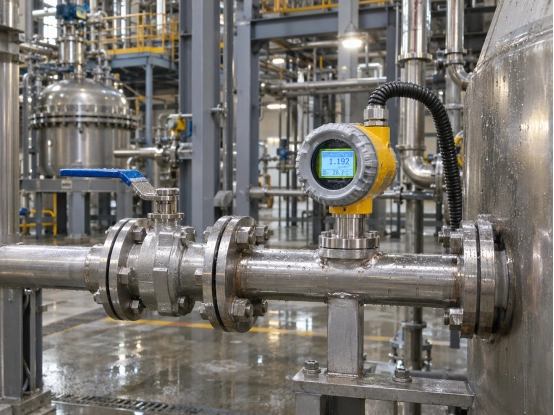
In selecting density meter materials that come into contact with the liquid, one must consider all exposed parts, including those contacted during probe cleaning. Even small amounts of corrosion can cause serious damage to the individual parts, affect the readings and also increase the maintenance work significantly. In this article we will compare the SS316, the Duplex 2205, the Hastelloy C and the PTFE coating for a density meter for corrosive liquids against the typical operating conditions.
Why Does Material Selection Matter for Corrosive Liquid Density Measurement?
Every type of corrosion has to be taken into account when selecting materials for a density measuring instrument. Uniform corrosion will slowly wear away surfaces. Pitting, for example, will create local holes in a material, while crevice corrosion develops in sheltered gaps. Stress corrosion cracking occurs when a material is susceptible to corrosion, under tensile stress and in a certain environment. All wetted parts of the probe and measuring instrument must be checked, including seals and connections. Corrosion can alter a tuning fork densitometer‘s vibration and shorten service life.
Key Factors to Consider Before Selecting Density Meter Materials
Chemical Composition and Concentration
All chemicals that will be in contact with any parts of the density meter should be listed, along with their concentrations and any impurities in the chemicals. Typically ‘acid’ is not a sufficient term to use when evaluating a material’s compatibility for use with a particular chemical. Further, a material’s compatibility at a given concentration does not automatically translate to compatibility at a different concentration.
Operating Temperature and Pressure
It is essential to note the maximum allowed temperature for the assembled density measuring instrument as opposed to the temperature allowed for the alloy used. Record normal and maximum pressure and temperature, including cleaning. High temperatures can promote corrosion.
Flow Conditions and Cleaning Requirements
Velocity, presence of abrasive particles and scale as well as crystallization and the clean-in-place (CIP) fluids used (with their concentrations and contact times) are to be recorded. Access for cleaning the probe has to be planned for continuous online measurement.
Comparing Common Density Meter Materials for Corrosive Liquids
1. Stainless Steel 316 – A Common Choice for General Industrial Applications
Stainless steel 316 combines general corrosion resistance with mechanical strength and is often cost-effective compared to nickel alloys. It can be used for compatible liquids, which are not too aggressive. Chlorides in solution, particularly when hot, can cause pitting or cracking. Stainless steel equipment, in other areas of a plant, does not necessarily mean that SS316 probes can be used.
2. Duplex 2205 – Improved Resistance in Chloride-Containing Environments
Duplex 2205 stainless steel contains both ferritic and austenitic phases. Many of the forms of corrosion that can be induced in service by chlorides (such as pitting, crevice corrosion and chloride stress corrosion cracking) are resisted by this alloy. Compared with conventional 316L, it generally has better resistance to these corrosion mechanisms in many environments, as well as higher strength. Verify the chemical, temperature, and impurities for chemical or petrochemical use.
3. Hastelloy C – For More Aggressive Chemical Environments
There are several different grades of Hastelloy C (a family of corrosion-resistant nickel-based alloys) for use with particularly aggressive chemicals, including some very corrosive acids and with high levels of chlorides. Specify the grade, such as C-276 or C-22. The key is to check the corrosion data for the specific material to be used against the concentration and temperature of the chemicals with which it is to be used. Whilst there is a high first cost for these materials, the cost of replacement parts and the cost of downtime must also be considered.
4. PTFE Coating – An Alternative for Corrosion Protection
A PTFE-coated chemical density meter has a non-stick fluoropolymer coating with broad chemical resistance as a barrier between the probe’s metal parts and the liquid being measured. This coating must not be damaged by scratches, abrasive particles, crystals or rough cleaning tools. Check coating coverage, temperature limits, and resistance to mechanical wear.
How to Choose the Right Density Meter Material: A Step-by-Step Guide
- Identify the Measured Liquid.Identify what reaches the probe during startup, normal production, and shutdown. Include the chemical names, concentrations, and impurities.
- Document the conditions.Create a table of two columns for normal and maximum values of temperature, pressure, flow, solids and also for any regular cleaning processes.
- Check Compatibility.Compare process conditions of the liquid to be measured with the corrosion resistance of a material represented by the corrosion chart. In case the mixture to be measured is not represented by the chart, an application-specific assessment has to be carried out.
- Calculate the potential replacement costs– Be aware of potential production downtime when replacing a spare part and calculate all relevant costs (e.g. maintenance, spare parts) for the different alternatives. Do not try to ‘prove’ an inappropriate service life for a part in order to make it appear to be a cost effective option.
- Request a configuration.Send the process details to the manufacturer and ask for the recommended probe, seal, and connection materials in the quotation.
Common Mistakes to Avoid When Selecting Corrosion-Resistant Density Meters
If you have already purchased a probe of the same type and this probe already is showing signs of corrosion, the standard SS316 configuration of the spare part has to be checked carefully. As mentioned above, even if an alloy with higher corrosion resistance is selected, there still is a risk of corrosion.
Review cleaning conditions and coating wear, and check gasket and connection materials. Deposits or crystals can interfere with measurement even without corrosion of the metal. Higher corrosion resistance of the alloy does not automatically also solve fouling problems.
Wepower WPX301: A Customizable Online Density Meter for Industrial Applications
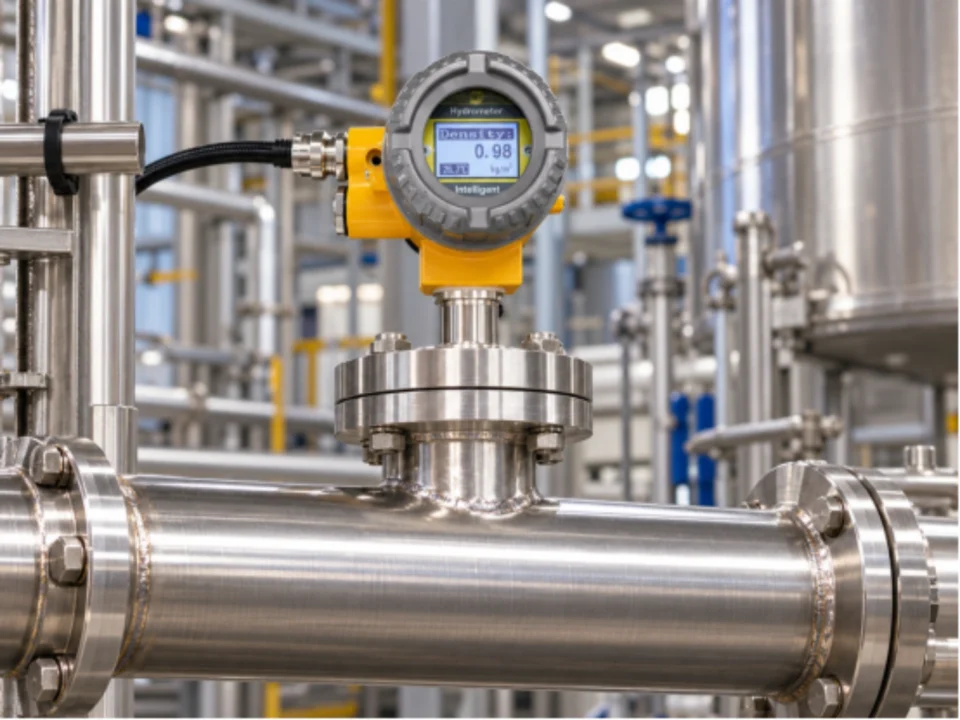
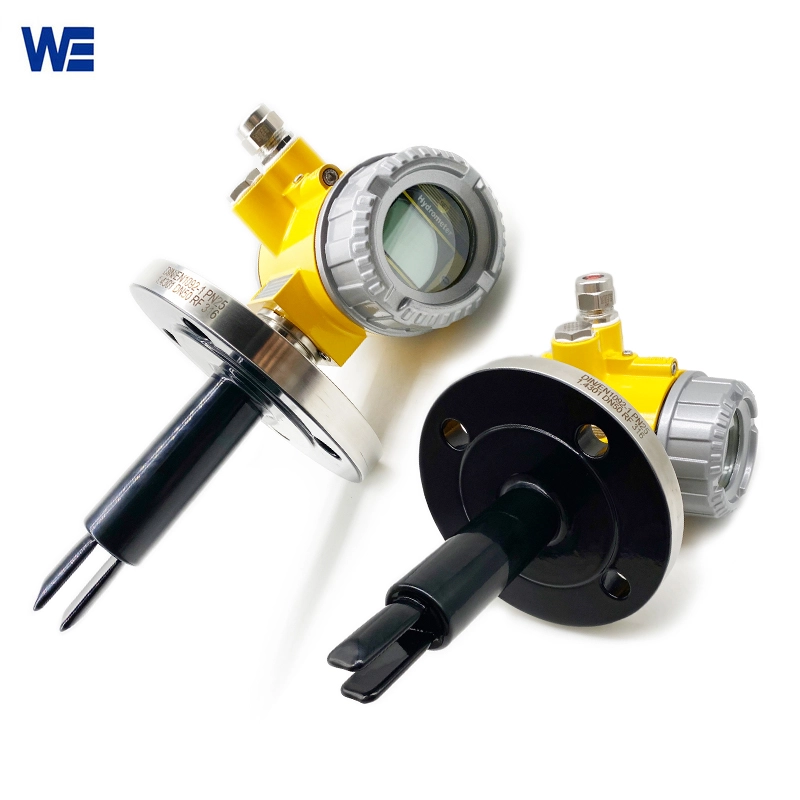
A density fork vibrates in the liquid of a bypass loop, tank or in-line installation and measures changing liquid density by means of changing vibration frequency. The Wepower WPX301 industrial density meter can be used for measurement in a pipeline, in a bypass loop or in a tank.
For the fork, options include SS316, 2205 (Duplex), Hastelloy C and PTFE coating. Other materials can be discussed. When inquiring about the right model, include the medium and operating conditions. Liquids that strongly foul or crystallize are not ideal for the WPX301.
Final Thoughts on Selecting Density Meter Materials
Need help selecting the right density meter material for your application? Contact Wepower Electronic to discuss your process conditions and explore a suitable WPX301 configuration.
Frequently Asked Questions About Density Meter Materials
Q: Is SS316 Suitable for Measuring Corrosive Liquids?
To assess SS316 for a corrosive liquid, please provide the name of the chemical, the concentration, any other ingredients and any impurities present, and the operating temperature of the liquid.
Q: Which Material Is Best for a Density Meter Used in Strong Acids?
For strong acids, there’s no ‘one size fits all’ material for measurement. Check the properties of the relevant Hastelloy C grade and PTFE coating to assess their compatibility with your particular liquid, at the temperatures involved and subject to mechanical stress.