- Have any questions?
- +86 15953537010
- admin@wepower-electronic.com

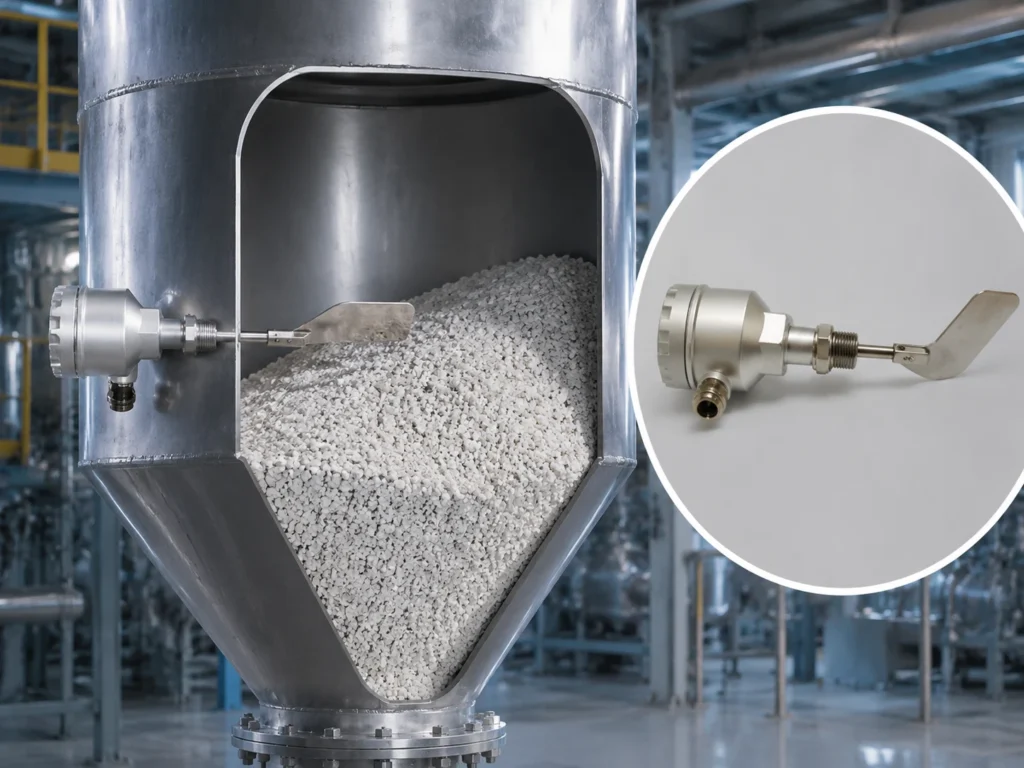
A rotary paddle level switch is one of the most reliable tools for spotting bulk solids. It uses simple mechanical motion and exact electrial control. This gives industries an afforable way to measure and control material levels in silos or hoppers. Knowing the woking principle of these level switches, what affects performance of the level switches, and how to pick the right model can make process work safer and steadier.
What is a rotary paddle level switch?
A rotary paddle level switch is a mechanical tool that spots solid materials such as grains, powders, or pellets. The blade links to the clutch through the shaft. When the blade stays clear of material, the motor runs as normal. Once material reaches the set height, the blade meets resistance and the switch sends an electrical signal to show the bin is full.
These switches have four main parts: a small motor that turns at about 1 RPM, a gearbox to pass on the turning force, a paddle that touches the material, and a sealed housing that protects the inside parts. Power use is 4W. Blade speed is 1 RPM. Measuring torque is 1.0 N•m. Power supply can be 220VAC, 24VDC. Contact capacity is SPDT 5A/250VAC.
Why Rotary Paddle Level Switches Are Used in Bulk Solid Applications
People like rotary paddle level switches because they work well even when dust or tough conditions are present. They can sense most dry solids that weigh more than 0.5 g/cm³. The strong build handles shaking and heat changes that show up in cement plants, grain silos, and plastic pellet storage spots.
They are also easy to fit on silos, hoppers, bins, or conveyors. Since they use mechanical sensing instead of capacitance or ultrasonic methods, shifts in dielectric value or static do not throw them off.
Key Factors to Consider When Choosing a Rotary Paddle Level Switch
Picking the right paddle level switch means looking at both your material traits and the process setting around it.
Material Characteristics and Application Conditions
Bulk density matters for good results. You can tune the torque to match the weight of the material you measure. When the material is heavy, set the spring torque to the strong spot. When the material is light, set the spring torque to the weak spot. Light powders need a more sensitive setting, while heavy granules need stronger torque so the switch does not trip by mistake.
Moisture level and particle size also change how the material flows around the paddle. Sticky stuff may build up on the blades, so think about that when you choose the model.
| Parameter | Typical Range | Influence |
| Specific Gravity | >0.5 g/cm³ | Determines torque setting |
| Particle Size | Fine–Coarse | Affects sensitivity |
| Moisture Content | Dry–Slightly Damp | Impacts adhesion on blades |
Installation Environment and Mounting Options
How you mount the switch affects accuracy. For side mounting, tilt the unit 15 to 20 degrees downward. This cuts down on direct hits from falling material. In tall silos, use extension shafts or flexible joints so the paddle sits right without strain on the shaft.
Do not place the switch right under a fill point where heavy material drops straight onto the blade. If you must put it there, add a 2mm protective plate about 200mm above the switch.
Electrical Specifications and Output Types
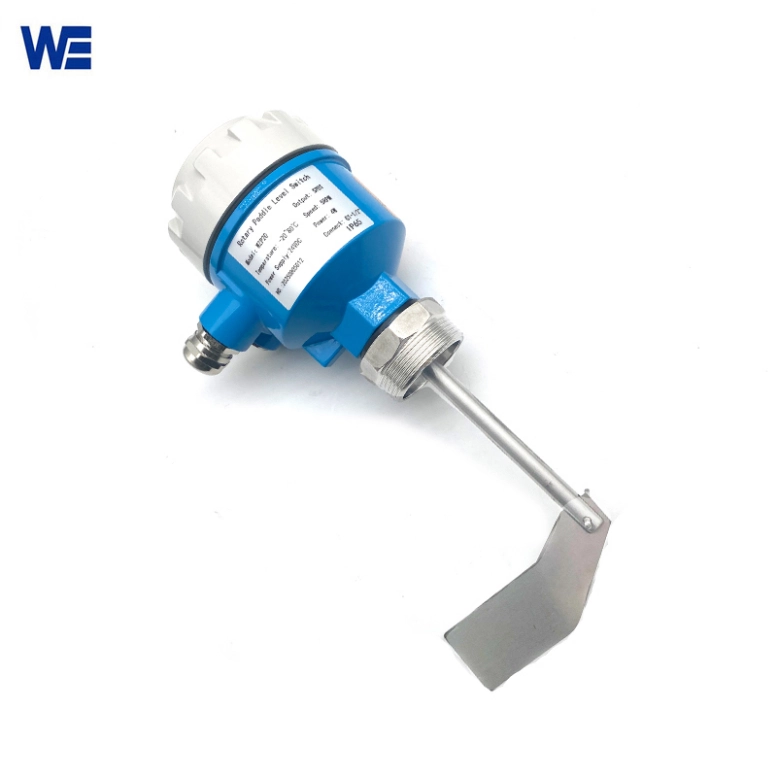
Most plants use either AC (110/220 V) or DC (24 V) power. The WZP20 model works with all three voltage choices. Outputs are usually relay contacts such as SPDT rated at 5A/250VAC. These contacts tie into PLCs or alarm circuits.
Operators can then stop conveyors when the full-level signal trips or start discharge when the low-level signal trips.
Design Features That Improve Performance and Reliability
Wepower Electronic rotary level switches add several features that make them last longer and cut downtime.
Construction Materials and Protection Ratings
Housings made from aluminum alloy or stainless steel stand up to dust and corrosion. Many models of paddle level switch reach IP65 ratings for outdoor spots or explosion-proof builds for areas with flammable dust.
Keep the install site free of corrosive gases, since these gases can harm aluminum parts.
Adjustable Sensitivity and Torque Settings
Adjustable torque lets you fine-tune the switch for different bulk densities. A slip clutch stops overload damage when material bridges or presses hard on the blade, which often happens with dense powders like cement.
Having several torque settings means one model can handle many jobs without new hardware each time.
Maintenance-Friendly Design Elements
Rotary paddles are easier to service than electronic sensors. Our unique design structure lets you swap motors or paddles without taking the whole unit apart. Check the drive shaft and blades for bends or damage. Clean off any material stuck on the blades and shaft. Sealed bearings need little grease even in dusty places.
Some models have LED lights that show motor status. These lights help when you check the unit through a sight glass.
Comparison with Other Level Detection Technologies
No one method works for every job. Knowing the other options helps you decide.
Rotary Paddle vs. Capacitance Level Sensors
Capacitance sensors read changes in dielectric value between probes. Rotary paddles simply feel mechanical resistance. Rotary paddles do better with coarse solids where dielectric shifts are small but the physical block is clear, such as pellets or grains.
Capacitance sensors can be more sensitive with fine powders, yet they need recalibration when material traits change a lot.
Rotary Paddle vs. Vibrating Fork Level Switches
Vibrating forks sense a drop in vibration frequency when they touch solids. They suit light powders like flour. They may miss large granules because the damping is not even. Rotary paddles handle heavier materials better, though they may miss very low-density dust.
Best Practices for Installation and Calibration
Good setup gives steady results from the start. Use sealing gaskets to keep dust out of the housing. Dust shortens bearing life. Cable glands should point down. Lock the cable nut tight as shown in Wepower Electronic’s manual. Place switches away from strong vibration sources like hopper vibrators.
Vibration through the wall can cause false trips. After you check the wiring, confirm the voltage matches the rating. Set torque to match the actual material density with the spring holes. Test the switch under normal load before you wire the outputs into the control logic.
Common Issues and Troubleshooting Tips
Even tough devices need attention now and then because of wear or wrong setup. Common causes are buildup on the blades or the wrong blade size for the material weight. When material flows past but the blade keeps turning, the blade may be too small. Change to a larger blade. Also check the power wires if the motor does not turn. The supply may be off or the motor may need replacement.
Clean the unit the way the maker says. Do not strike the shaft or blade during install or service. Set up regular checks on the turning parts and the terminals inside the junction box. Grease bearings at the maker’s suggested times, especially when the unit runs at high temperatures up to 80°C. The working temperature range is -20~80℃.
How Wepower Electronic Supports Industrial Measurement Needs
Good suppliers help keep measurement steady in systems that handle bulk solids. Wepower Electronic based in Yantai, China, makes industrial automation instruments. These cover level, flow, pressure, temperature, density, and viscosity sensors used around the world in process plants that need accurate readings tied into PLC networks.
Our rotary paddle models have strong mechanics that have proven themselves in cement lines, grain terminals, plastics plants, and chemical reactors with powder materials. Explosion-proof versions meet safety rules for hazardous zones. Extended-shaft versions fit deep silos that exceed normal lengths.
FAQs
Q1: What materials can a rotary paddle level switch detect?
It detects most dry bulk solids such as grains, powders, pellets, and cement dusts when their specific gravity is above about 0.5 g/cm³.
Q2: How often should maintenance be performed?
Check the unit every few months. Clean the blades often and look at shaft alignment after long shutdowns.
Q3: Can I install it vertically?
Yes. Vertical mounting works for top-level detection. Horizontal mounting works for side-wall use depending on silo shape.
Q4: Are explosion-proof versions available?
Yes. Some models have explosion-proof housings for combustible dust areas and meet industrial safety rules.