- Have any questions?
- +86 15953537010
- admin@wepower-electronic.com

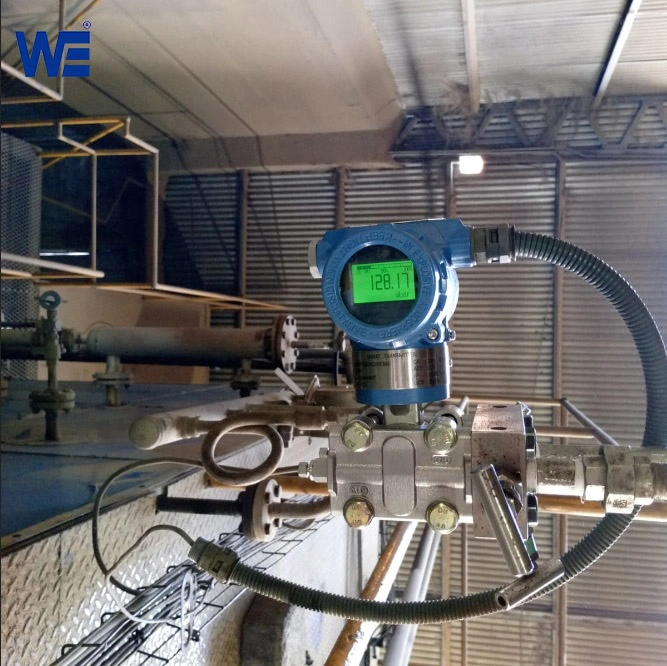
Even seasoned engineers may difficult to distinguish between a pressure sensor, pressure transducer, and pressure transmitter. To put it simply, pressure is measured by all three. But they differ in how they process and transmit that information. A pressure sensor detects. A transducer converts. And a transmitter sends the data further along for monitoring or control.
Why These Terms Cause Confusion
Pressure measurement devices often overlap in design and function. The terminology varies by manufacturer and industry. This adds to the confusion. However, by breaking down how each device operates, their distinctions become clearer.
What Is a Pressure Sensor?
A pressure sensor is the most basic form of pressure measurement equipment. It directly detects physical pressure. This can be from gas or liquid. And it converts it into an electrical signal proportional to that pressure. In simple terms, it senses force per unit area applied on its surface.
There are some types of digital pressure sensors which are available in the current market :
- Piezoresistive sensors: Use changes in electrical resistance for measuring
- Capacitive sensors: Measure variations in capacitance according to diaphragm movement.
- Single-crystal silicon sensor: The resistivity of the crystal changes, and this change is directly proportional to the applied pressure.
- Optical sensors: Employ light-based detection for high precision requests.
- Resonant sensors: Detect frequency shifts caused by pressure changing.
What is Pressure Transducer?
A pressure transducer converts physical pressure into a standardized electrical output signal. This is typically voltage or current. And it can be read by control systems or data loggers.
Industrial pressure transducers are essential in sectors like oil and gas. They also matter in water treatment. And in aerospace. There, accurate conversion from mechanical to electrical signals ensures reliable process control. For example,pressure transducer may output 0–5V or 0–10V signals and which are compatible with PLC as well.
Analog transducers produce continuous voltage or current outputs. These are proportional to measured pressure. Digital transducers use communication protocols, such as RS485 or Modbus.
What Is a Pressure Transmitter?
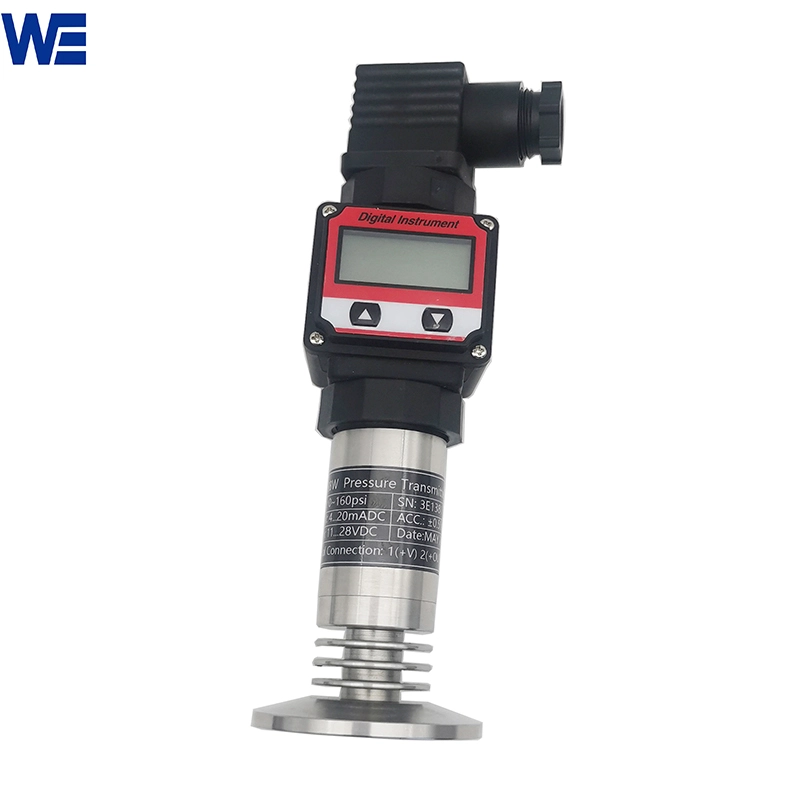
A step beyond the transducer is the pressure transmitter. It not only converts the detected signal. But it also amplifies and conditions it for long-distance transmission. This often happens over industrial networks. A differential pressure transmitter measures differences between two points. It is ideal for flow rate calculations or filter monitoring.
In industrial automation systems, transmitters are favored. They provide stable signals over large distances without degradation. They typically output standardized signals like 4–20mA or 1–5V. These ensure compatibility with most control equipment.
Key features distinguishing transmitters include:
- Built-in signal conditioning.
- Temperature compensation.
- Robust housing suitable for harsh environments.
- Two-wire loop power operation using 24 VDC supply.
Simple Way to Understand the Difference
Think of it this way:
- A pressure sensorfeels the change.
- A pressure transducertranslates that feeling into numbers.
- Pressure transmitters transmit this data over long distances for use by monitoring or automation systems.
Pressure Sensor vs Pressure Transducer vs Pressure Transmitter
| Device Type | Function | Typical Output | Application Example |
| Pressure Sensor | Detects raw physical pressure | Millivolt signal | Automotive systems |
| Pressure Transducer | Converts mechanical input into electrical output | Voltage/Current (0–10V) | Hydraulic monitoring |
| Pressure Transmitter | Amplifies and sends conditioned signal | 4–20mA/1–5V | Process automation |
Which One Is Commonly Used in Industrial Automation?
In industrial automation environments where reliability is critical, pressure transmitters are generally preferred.
Why Pressure Transmitters Are Preferred in Industrial Applications
Pressure transmitters provide excellent accuracy and stability even under extreme environments. Such as vibrations, temperature fluctuations and electromagnetic disturbance. It also maintains consistent power delivery through a 24 VDC supply line. This makes them ideal for continuous process monitoring in refineries or chemical plants. There, downtime is costly.
Reliability is another major factor. Transmitters undergo rigorous calibration. This ensures repeatable performance over years of service life.
Common Uses for Pressure Sensors
Pressure sensors shine in compact systems. These require direct measurement at short range. Like pneumatic tools or portable testing equipment. They’re cost-effective when high-level signal conditioning isn’t necessary. Factors influencing their selection include size constraints. Also, response time requirements. And budget considerations.
Applications for Pressure Transducers
Pressure transducers find their niche where precise conversion from mechanical force to electrical signal is required. But full transmission capabilities aren’t needed. They’re often installed within machinery control loops or laboratory setups. These measure hydraulic pressures with high resolution. Their fast response time makes them perfect for dynamic testing environments. Such as engine performance analysis.
Utilization of Pressure Transmitters in Various Fields
Pressure transmitters dominate industries like petrochemical processing. Also, power generation. Food production. And wastewater management. This is due to their durability and accuracy over extended cabling distances.
Output Signal Characteristics of Pressure Transmitters
The standard 4–20mA current loop remains the most popular output format. It minimizes signal loss over long cables. And it allows simultaneous powering of the device. This is a practical feature in field installations far from control panels.
The Use of 24 VDC with Pressure Transmitters
The widespread adoption of 24 VDC stems from safety and compatibility reasons. It’s low enough to minimize shock risk. Yet it is sufficient to drive electronic circuits efficiently. This works across multiple instruments within an industrial network.
Selecting the Appropriate Device for Your Needs
Choosing between a sensor, transducer, or transmitter depends on several key factors:
- Distance between measurement point and controller
- Required accuracy
- Signal type (analog vs digital)
- Environmental conditions
Understanding your system’s specifications ensures you select equipment. It balances cost with performance needs effectively.
Wepower Electronic offers complete solutions across all these categories. Pressure sensors for compact designs. Industrial-grade transducers for precision conversion tasks. And robust transmitters suited to demanding automation processes. Their expertise spans liquid level, temperature, flow, density, viscosity measurements. All integrated into modern process control systems worldwide.
FAQs
Q: What is the primary differences between a sensor and a transmitter?
A: A sensor detects physical changes. A transmitter processes this data and transmits it further via a standard output such as 4-20 mA signal.
Q: Can I use a sensor to replace a transmitter?
Yes. But only if your system does not require long-distance transmission and complex signal processing.
Q: Why do most transmitters use 24 VDC?
It provides safe low-voltage operation. While maintaining enough power for stable signal transmission across industrial loops.
Q: Are digital pressure sensors more accurate than analog ones?
Digital models often provide higher precision with better noise immunity. But they depend on compatible communication interfaces like RS485 or Modbus.
Q: Which device suits process automation best?
Pressure transmitters are typically preferred. Thanks to their reliability, accuracy, and standardized outputs compatible with PLC-based control systems.